

 4.9
4.9 4.5
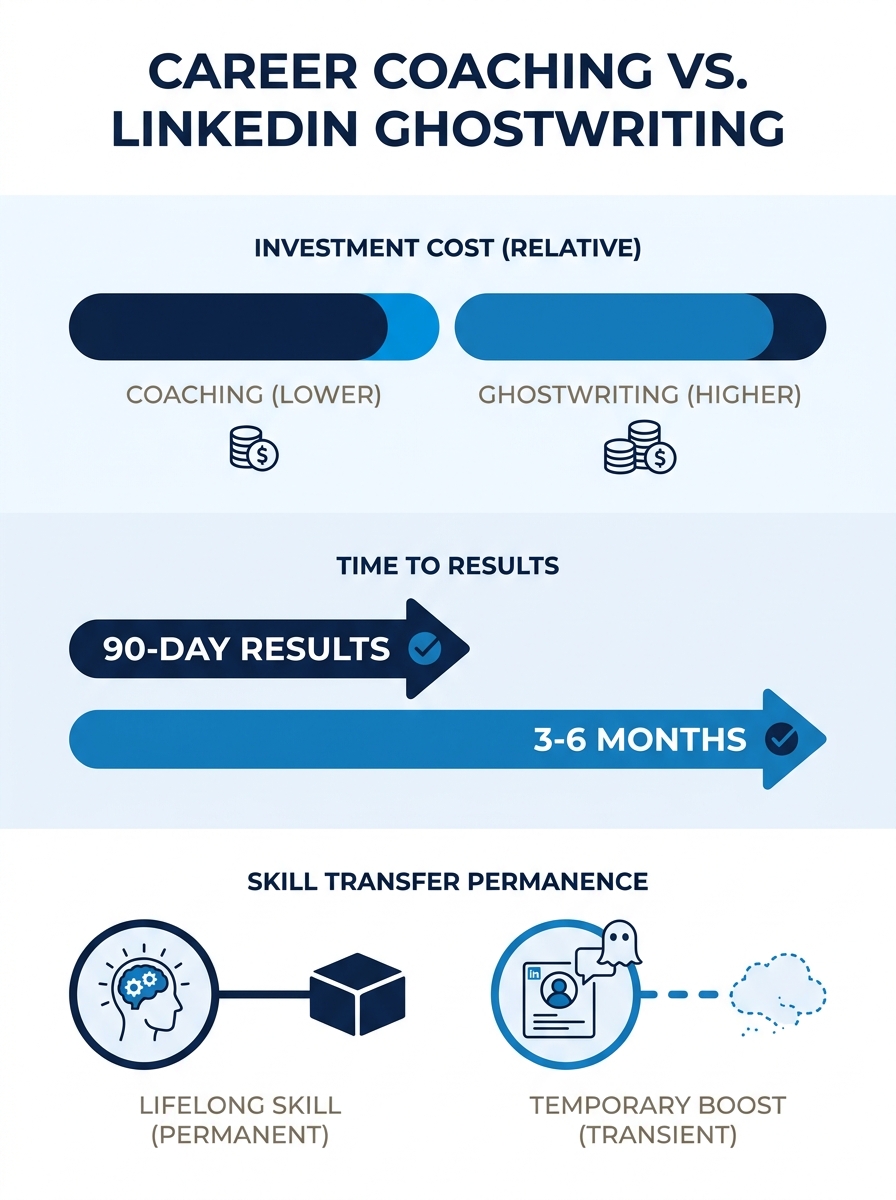
4.5Career coaching produces interview-ready results in approximately 90 days at $1,750–$3,450 per engagement. LinkedIn ghostwriting costs $2,000–$10,000 per month and requires 3–6 months before generating meaningful inbound leads, according to Windmill Growth’s comparison analysis. For active job seekers, coaching wins on speed to interviews.
TL;DR: Career coaching gets you to interviews faster (≈90 days) at lower total cost ($1,750–$3,450 total). LinkedIn ghostwriting builds long-term inbound visibility but takes 3–6 months and runs $2,000–$10,000/month. Choose coaching if you need a job now; choose ghostwriting if you’re building a consulting pipeline or executive brand.
The Price Tags Aren’t Even Close
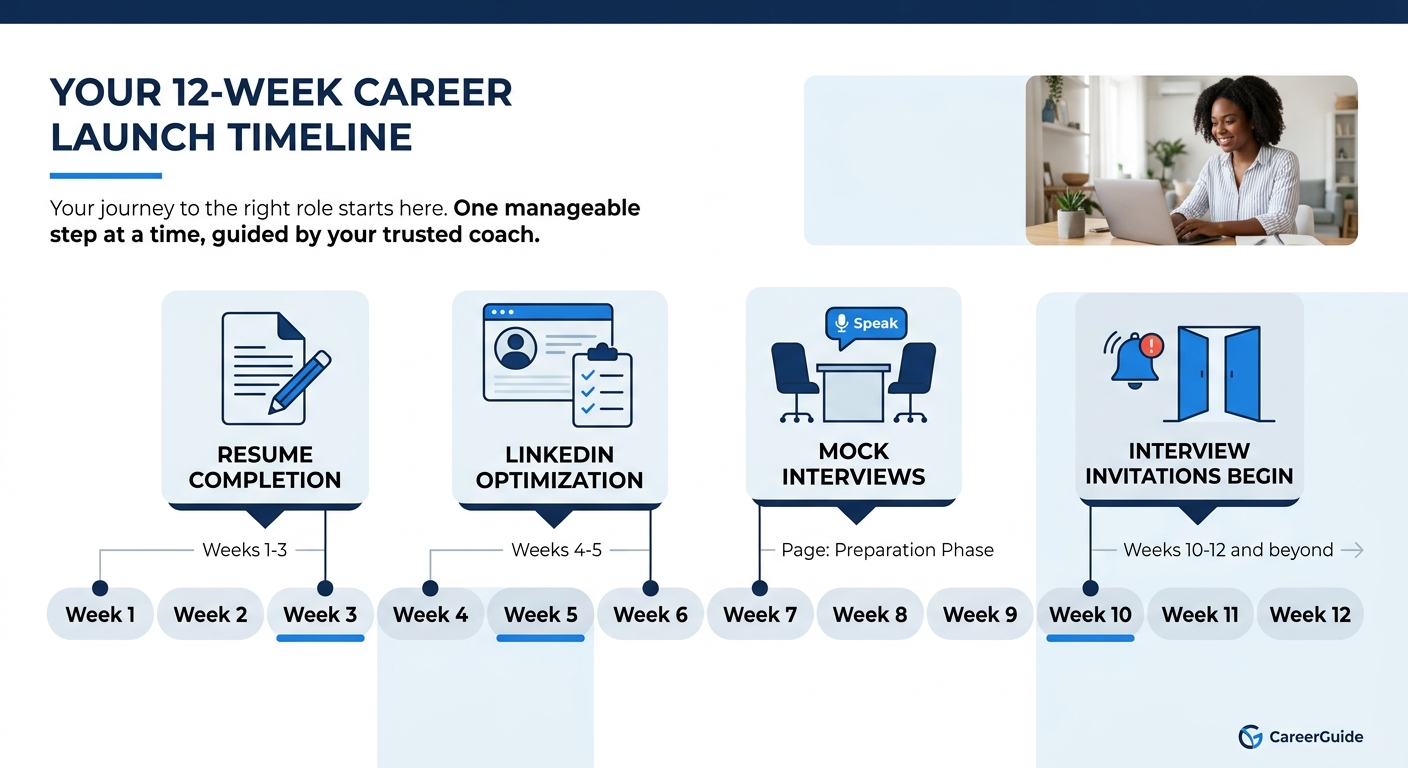
The dollar gap between these two services is the first thing worth examining, because the framing of “career coach vs LinkedIn ghostwriter” implies they’re comparable purchases. They aren’t. A professional career coaching engagement — including resume work, interview prep, and job search strategy — costs between $1,750 for a professional-tier package and $3,450 for executive-level service. That’s a one-time fee covering 8–12 weeks of work.
LinkedIn ghostwriting operates on a recurring monthly retainer. Freelance ghostwriters charge $2,000–$5,000 per month. Premium agencies charge $5,000–$10,000 or more. A six-month engagement at the low end ($2,000/month) totals $12,000 — more than three times the cost of the most expensive coaching package.
The spending structures also differ in what happens after you stop paying. Coaching transfers skills you keep: interviewing ability, networking tactics, personal brand clarity. When you stop paying a ghostwriter, the content pipeline stops.
| Career Coaching | LinkedIn Ghostwriting | DIY (LinkedIn Premium + Self-Study) | |
|---|---|---|---|
| Total Cost (6 months) | $1,750–$3,450 (one-time) | $12,000–$60,000+ | $360 ($60/mo for Premium) |
| Time to First Results | ~90 days | 4–8 weeks for engagement; 3–6 months for leads | Varies widely |
| Skill Transfer After Engagement | High — interviewing, networking, positioning | Low — content stops when payments stop | Medium — skills build slowly |
| Best For | Active job seekers targeting specific roles | Executives, founders, consultants building inbound pipeline | Budget-conscious professionals with time to invest |
What Career Coaching Actually Delivers
A career coach does more than polish your resume. The International Association of Career Coaches defines the role clearly: “A career coach is a professional who can help you clarify your dream job. Then, they’ll help you land that job and excel at it.” That distinction matters because clarity of direction is what separates a focused 90-day job search from a scattered 9-month one.
Typical coaching packages include resume overhaul, LinkedIn profile optimization, interview preparation, networking strategy, and sometimes direct recruiter outreach. The ROI analysis from Careers by Design found that “coaching reduces job search time by refining resumes, interview skills, and networking strategies, saving weeks or even months of unemployment or underemployment costs.” For someone earning $120,000 annually, each month of unemployment costs roughly $10,000 in lost income. Cutting that search short by even 6 weeks produces a career coaching ROI of $15,000 on a $3,000 investment.
Coaching also addresses the alignment problem that kills interview conversion rates. If your resume says one thing and your interview presence communicates another, recruiters notice the disconnect. Professionals who want to make sure their coaching aligns with their resume narrative will find that misalignment is one of the most common reasons qualified candidates stall after first-round screens.
The 90-day timeline comes from real user reports. One job seeker in the r/jobsearchhacks subreddit described their experience with a career coach: “My greatest takeaways were learning to network on LI, creating a persona or personal brand, selling my skills and experience, sharpening my interviewing skills. It isn’t a fast process. I started seeing results in about 90 days.” That’s a realistic window, and the skills gained — networking, branding, interview technique — persist long after the engagement ends.
If you’re evaluating professional career coaches, look for packages that bundle LinkedIn optimization with resume work and interview practice, because the combination is what creates the interview acceleration effect.
LinkedIn Ghostwriting Operates a Different Funnel
A LinkedIn profile writer or ghostwriter doesn’t help you apply for jobs. They write content — posts, articles, thought leadership — designed to make opportunities come to you. The mechanism is visibility: consistent posting increases your profile views, which increases recruiter messages and partnership inquiries.
Windmill Growth’s analysis is blunt about the timeline: “Whether DIY or ghostwritten, expect 3–6 months of consistent posting before meaningful inbound leads. Followers and engagement come faster, usually within 4–8 weeks.” So you’ll see likes and comments relatively quickly, but actual interview invitations or business conversations take considerably longer to materialize.
The performance data breaks down like this: a DIY approach typically yields 500–2,000 new followers and 5–20 inbound conversations over six months. Professional ghostwriters generate 1,000–5,000 new followers and 10–50+ inbound conversations in the same period, driven by higher posting consistency and strategic topic selection.
The same Windmill Growth analysis offers a warning worth repeating: “Half-hearted DIY and half-hearted ghostwriter relationships both produce mediocre results.” A ghostwriting engagement requires 2–4 weeks of onboarding, regular interviews between writer and client, and ongoing input about your expertise. It’s a collaboration, and it works best when the client actively participates in shaping the voice.
Ghostwriting also compounds with other LinkedIn optimization work. Profiles with 20+ endorsed skills saw 2.5 times more interview callbacks, according to LiftMyCV’s 2026 LinkedIn optimization dataset. If your profile itself isn’t optimized — headline, about section, skills endorsements — even great content posts won’t convert profile visitors into interview conversations. Our LinkedIn profile optimization checklist for mid-career professionals covers those foundational elements that need to be in place before any content strategy can work.
The Speed-Cost-Permanence Framework
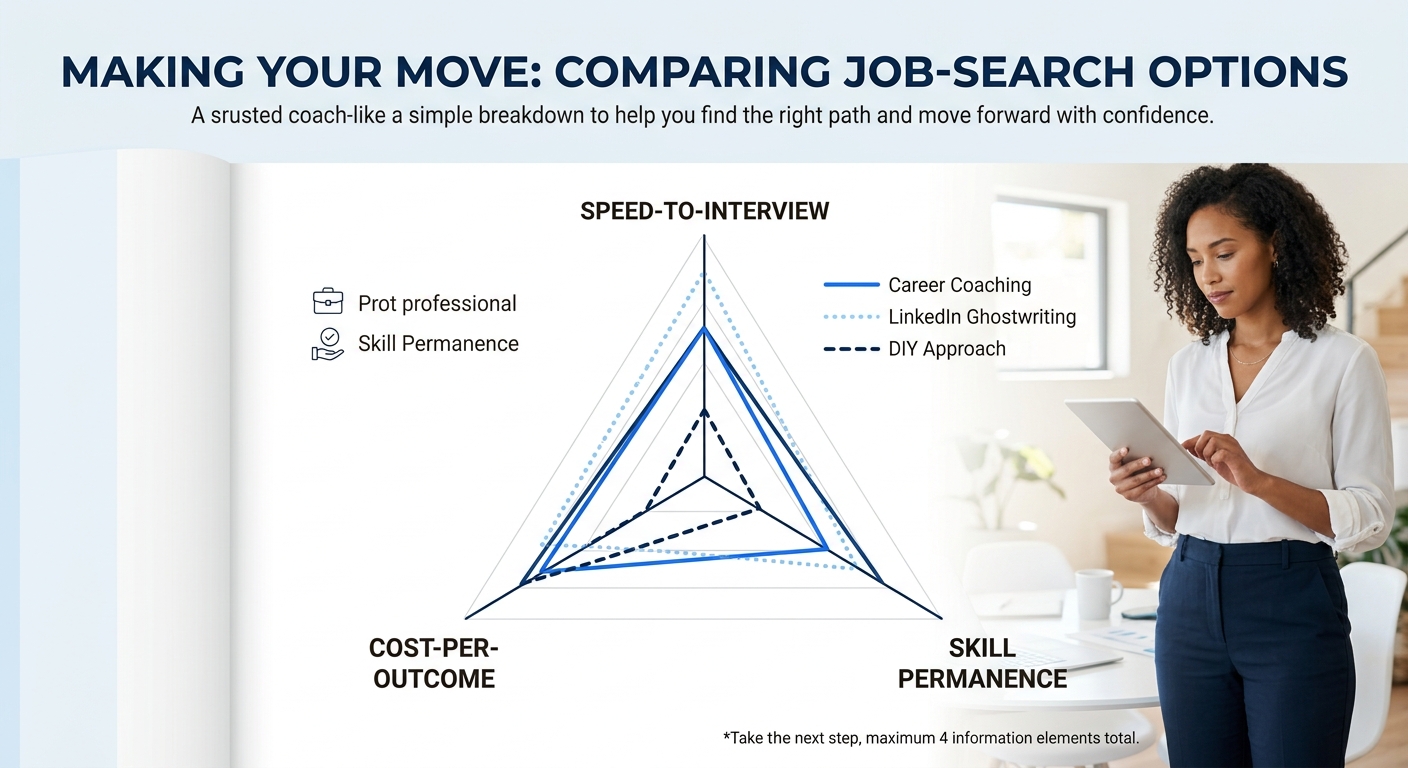
When comparing any job search investment, evaluate it on three axes: speed-to-interview, cost-per-outcome, and skill permanence. This framework clarifies which service fits your situation instead of letting marketing copy make the decision for you.
Speed-to-interview measures how quickly the investment translates into actual interview invitations. Career coaching wins here decisively. The 90-day window includes time for resume rewrites, LinkedIn optimization service delivery, interview practice, and active application or networking cycles. Ghostwriting’s 3–6 month ramp means you’re paying for months of brand-building before the first recruiter reaches out because of a post you published.
Cost-per-outcome requires you to estimate how many interviews each service generates. If career coaching at $3,000 produces 8–12 interviews over 90 days, the cost per interview runs $250–$375. If ghostwriting at $3,000/month over 6 months ($18,000 total) produces 10–50 inbound conversations — only a fraction of which convert to formal interviews — the cost per interview ranges from $900 to $3,600+. The math favors coaching by a wide margin for anyone whose primary goal is employment.
Skill permanence measures what you retain after the engagement ends. Career coaching scores high: you walk away knowing how to network on LinkedIn, how to position yourself in interviews, and how to reverse-engineer a job description into a targeted resume. Ghostwriting scores low on permanence because the service is the output. Stop paying, and the content stops. DIY falls somewhere in between — the skills build slowly, but they’re yours.
If your goal is a specific job in the next 90 days, coaching delivers 3–4x more interviews per dollar spent than ghostwriting.
When the Two Services Overlap — and Conflict
Here’s where the career coach vs LinkedIn ghostwriter comparison gets tangled. Many career coaches now include LinkedIn profile optimization as part of their packages. And many LinkedIn ghostwriters claim their content strategy will “land your next role.” The service boundaries have blurred.
The overlap creates a real risk of double-spending. If you hire a career coach who rewrites your LinkedIn profile and then separately hire a ghostwriter who overhauls the same profile to match their content strategy, you’ve paid twice for conflicting positioning. The coach optimized your profile to attract recruiters for job applications. The ghostwriter optimized it to attract followers for thought leadership. Those two frames require different headline structures, different “About” sections, and different featured content.
We’ve written before about how career coaching and resume strategy interact, and the same principle applies here: the professionals you hire need to work from a unified positioning strategy, or their efforts cancel each other out.
Warning: If you hire both a coach and a ghostwriter simultaneously, make sure they’re coordinating on your LinkedIn headline, About section, and featured content. Conflicting profile optimization strategies confuse recruiters and dilute your positioning.
For most active job seekers spending $2,000–$5,000 on their search, a single career coaching engagement with built-in LinkedIn optimization service delivers the highest concentration of results per dollar. Ghostwriting makes sense as a separate investment after you’ve landed, when your goal shifts from “get hired” to “build authority.”
Questions the Numbers Still Can’t Answer
The data strongly favors career coaching for interview speed and cost efficiency. But several gaps in the available evidence make this comparison less tidy than it appears.
First, the 90-day coaching timeline comes from self-reported user experiences, not controlled studies. Selection bias is real: people who invest $3,000+ in coaching are already more motivated than the average job seeker, which inflates the reported results. No study has isolated the coaching effect from the motivation effect.
Second, ghostwriting ROI data comes primarily from agencies selling ghostwriting services. Windmill Growth’s analysis is unusually honest about timelines and limitations, but the 1,000–5,000 follower projections are still agency estimates. Independent verification of these numbers across a large sample doesn’t exist yet.
Third, the comparison assumes an either/or decision. Some professionals — particularly those at the VP level and above — need both, because their job search is equal parts application and reputation. The interaction effect of combining coaching and ghostwriting hasn’t been measured. Whether the two services multiply each other’s impact or create diminishing returns at scale remains an open question.
And the LiftMyCV finding that profiles with 20+ endorsed skills saw 2.5x more interview callbacks is correlational. Profiles with many endorsements tend to belong to well-networked professionals who would attract recruiter attention regardless. Separating the signal from the noise in LinkedIn optimization data is a problem the industry hasn’t solved.
If you’re deciding between these two investments right now, the speed and cost data point clearly toward coaching for employment-focused goals. But treat all the specific numbers in this comparison — including the ones favoring coaching — as directional estimates, not guarantees.