


 4.9
4.9 4.5
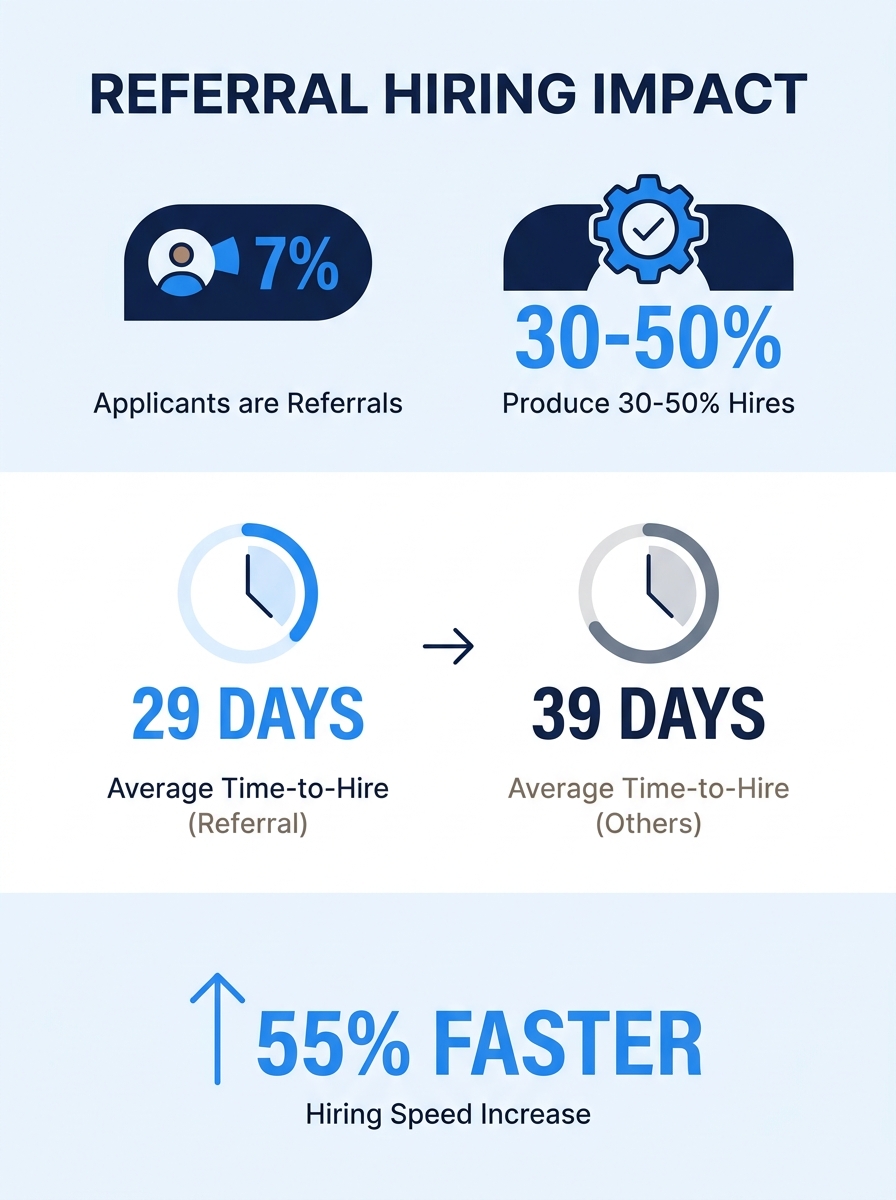
4.5Employee referral programs generate 30 to 50% of all hires at most companies despite referrals making up roughly 7% of total applicants, making a referred candidate 4 to 10 times more likely to receive an offer than someone who applies cold through a job board. The ecosystem surrounding these referrals is what career advisors loosely call the “hidden job market.”
TL;DR: The popular claim that 70–80% of jobs are never posted has no verified original study behind it, but the underlying dynamic is real and measurable. Referrals produce 30–50% of hires from 7% of applicants, referred candidates get hired 55% faster, and companies save roughly $7,500 per referral hire. Your informational interview strategy and direct outreach affect your outcome far more than submitting another online application.
The Actual Data Behind Referral Hiring
The phrase “hidden job market” gets thrown around carelessly. Career coaches cite 70%, 75%, even 80% of jobs as unadvertised, but when you trace those numbers back, there’s no original peer-reviewed study supporting any of them. The claim appears to have been recycled through career advice columns for decades, each author citing the previous one, with no anchor at the source.
The verified data tells a less dramatic but still striking story. According to aggregated referral statistics from EmployeeReferrals.com, referred candidates in retail see a 20% faster time-to-hire and are 32% more likely to complete their first year on the job, reducing hiring costs by an estimated 30%. Across industries, referral hires reach the offer stage in an average of 29 days compared to 39 days for candidates from other channels, a 55% speed advantage.
At SHRM’s own organization of roughly 500 employees, about 50% of referrals became hires and slightly more than 10% of all hires in 2024 were employee referrals. Smaller companies with fewer than 100 employees convert referrals at even higher rates because hiring managers and referrers are often in the same room.
So the hidden job market isn’t some mythical underground economy. It’s a well-documented preference companies have for candidates who arrive with a built-in endorsement.
Why Companies Funnel Resources Into Referral Programs
The math makes the corporate preference obvious. Referral hires save companies approximately $7,500 per position compared to traditional sourcing channels. That figure accounts for reduced advertising spend, shorter recruiter hours, and lower turnover during the first year. Social media referrals yield a 45% retention rate versus 25% for candidates sourced through traditional methods, according to hiring platform data.
Fifteen percent of companies now offer non-monetary rewards to employees who refer successful hires, things like extra PTO, gift cards, or professional development budgets. The other 85% still rely on cash bonuses, typically ranging from $1,000 to $5,000 depending on the seniority of the filled role. These programs exist because they work: when a company pays an employee $2,000 for a referral but avoids spending $9,500 on a traditional hire, the economics are obvious.
And there’s a quality signal built into the referral itself. An employee who recommends a former colleague is staking some professional reputation on that recommendation. Hiring managers know this, which is why referral candidates often skip early screening rounds entirely and move straight to a substantive interview.
An employee who recommends a former colleague is staking professional reputation on that recommendation, which is why referral candidates often skip early screening rounds entirely.
If you’ve been optimizing your resume for ATS systems, that effort matters for the posted-job pipeline. But for the referral pipeline, your resume enters through a different door with a different set of eyes reading it first.
Ghost Jobs Distort the Visible Market
While the hidden job market pulls real opportunities away from public boards, a parallel problem pushes fake ones onto them. Lisa Simon, chief economist at Revelio Labs, calls this tactic “cream skimming,” because it allows companies to identify the most qualified candidates without conducting an active hiring process.
Ghost jobs are postings that companies leave up with no immediate intention of filling them. Some are kept active to build a talent pipeline for future openings. Others exist because an internal candidate has already been selected and the posting is a compliance formality. A few are posted purely to gauge market salary expectations without any plan to hire at all.
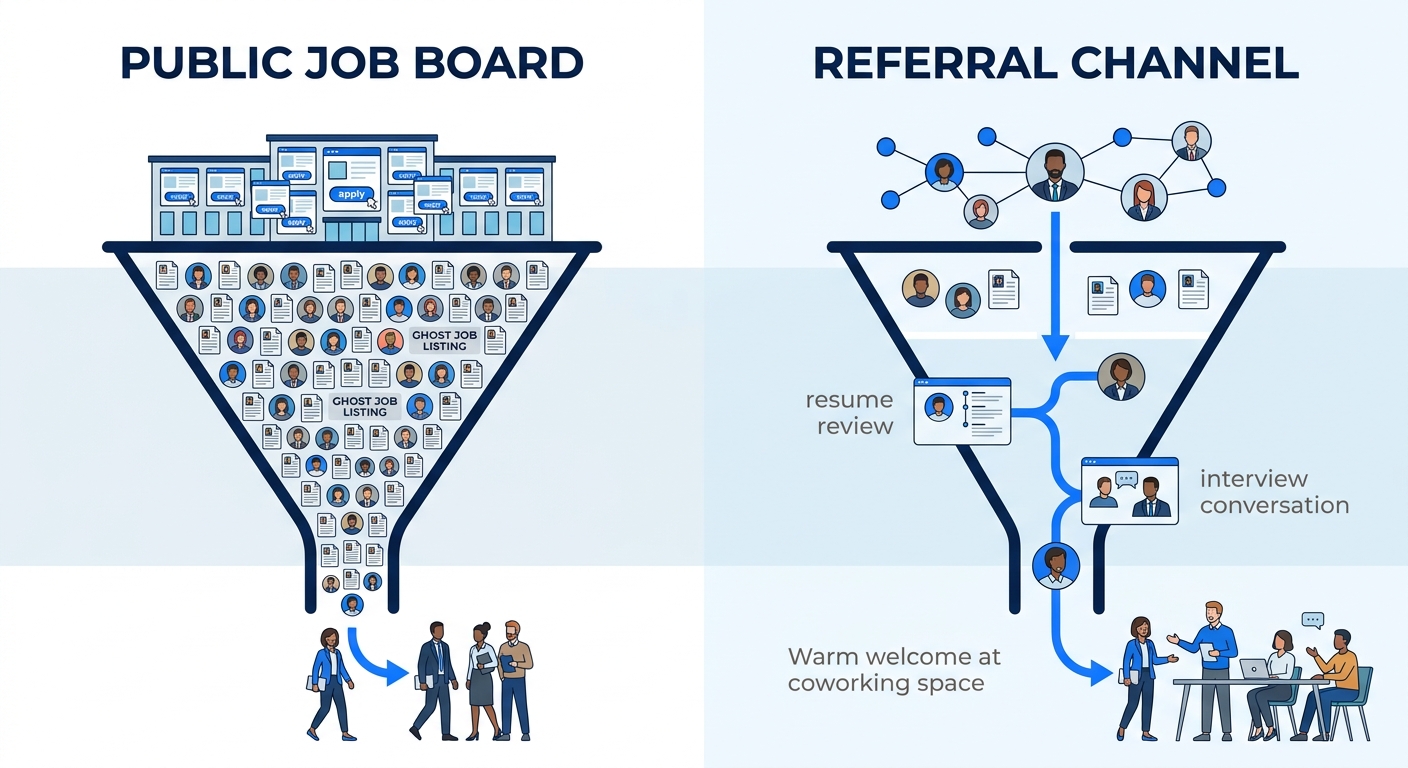
The practical effect on job seekers is devastating. You spend 45 minutes tailoring a resume, writing a personalized cover letter using your cover letter personalization playbook, and researching the company, only to submit into a void. By some estimates, 20–30% of active job postings on major boards at any given time are ghost listings.
This means the visible job market is smaller than it appears, and the unadvertised job market is more active than most candidates realize. The two forces work together to make cold applications increasingly inefficient while making relationship-based job search networking increasingly essential.
How Informational Interviews Create Referral Pathways
An informational interview is a 15- to 30-minute conversation where you learn about someone’s role, team, or company with no direct ask for a job. According to Columbia University’s Career Education office, your initial outreach should be brief and contain how you found the person, your current professional situation, and what specifically you’re hoping to learn.
The informational interview strategy works because it creates the conditions for a future referral without the awkwardness of asking a stranger to vouch for you on day one. You’re building context. When a role opens on that person’s team three weeks later, they already know your background, your communication style, and your genuine interest in the work. You become the obvious person to refer.
The CareerOneStop resource from the U.S. Department of Labor emphasizes keeping these meetings professional: start on time, ask prepared questions, listen and take notes, and keep the conversation within the agreed timeframe. Treating it casually or letting it drift into a pitch for yourself kills the relationship before it starts.
Forty percent of informational interview conversations eventually lead to referrals, according to hiring platform tracking data. That conversion rate dwarfs the 2–3% response rate that most cold applications generate on job boards.
Tip: The strongest informational interview request mentions a specific shared connection or interest, keeps the ask to 15 minutes, and names exactly what you want to learn. Generic “I’d love to pick your brain” messages get ignored. Try: “I noticed your team shipped [specific project]. I’m exploring similar work in [field] and would value 15 minutes to hear how you approached [specific challenge].”
If your LinkedIn profile isn’t ready for the scrutiny that follows an informational interview request, spend time fixing the summary mistakes that make recruiters skip past you before sending outreach.
The Staffing Agency Back Channel
Recruiters at specialized staffing agencies maintain direct relationships with hiring managers and access unadvertised jobs that never appear on public boards. This back channel works differently from referrals because the recruiter acts as an intermediary who matches candidates to roles based on existing client relationships.
The advantage is access. A recruiter who has placed 15 people at a company over three years hears about openings days or weeks before they’re posted, sometimes before the job description is even written. The disadvantage is that agency recruiters work for the company, not for you. They’re filling a specific slot, and if your background doesn’t match, the relationship has limited value.
Partnering with a staffing agency works best when you target firms that specialize in your industry. A generalist agency that covers everything from accounting to engineering will treat you as a number. A specialist firm that focuses on, say, supply chain roles or healthcare IT will have deeper relationships with fewer companies, which translates to better matching and faster placement.
Companies maintain employee referral programs that give current employees incentives for candidate referrals, and many employers choose not to post openings publicly precisely because these internal channels and agency partnerships fill roles faster and cheaper.
Restructuring Your Time Across Channels
The data points in a clear direction for anyone in an active job search. If referrals produce 30–50% of hires from 7% of applicants, and cold applications produce a 2–3% response rate while competing against ghost listings, the rational allocation of your search time should weight heavily toward relationship-building activities.
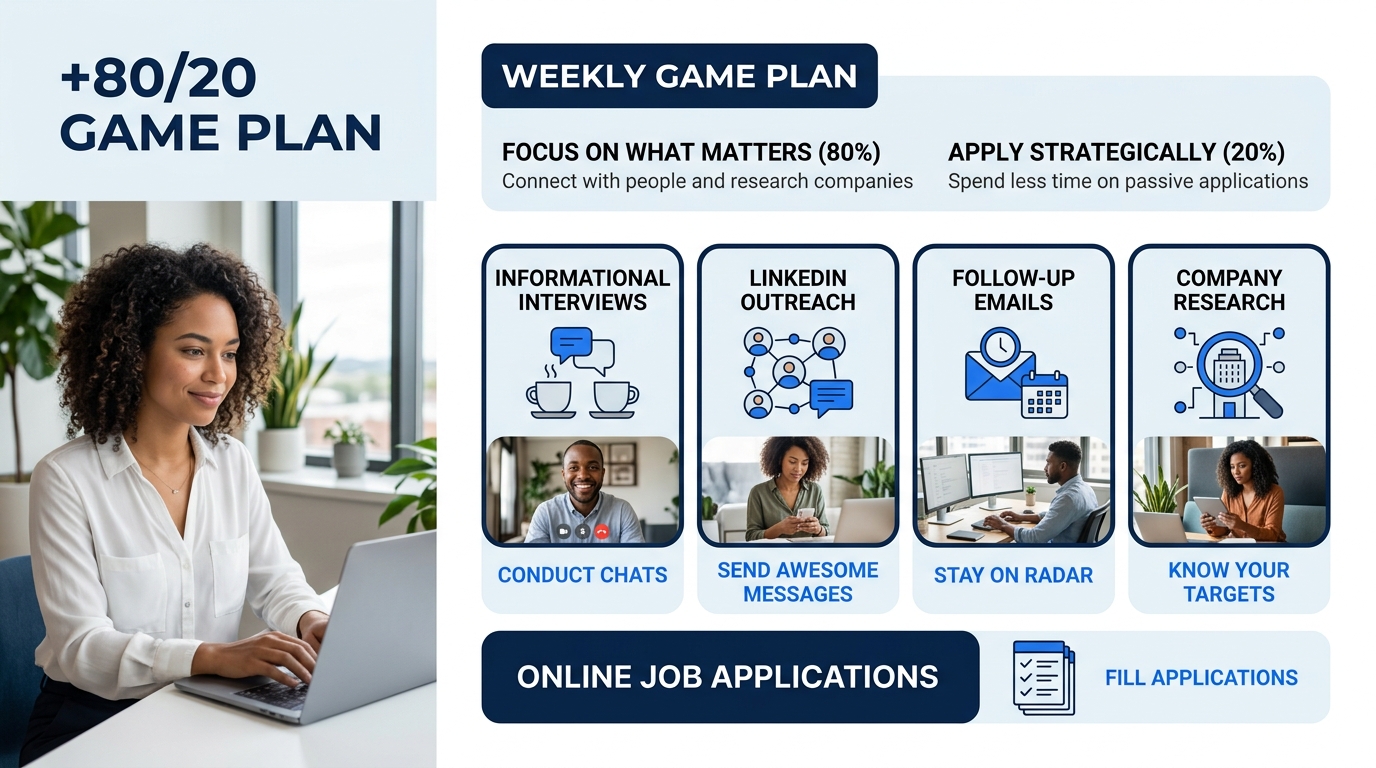
A practical split: spend roughly 20% of your weekly job search hours on online applications and 80% on direct outreach, informational interviews, and maintaining your professional network. That 80% includes researching companies where you’d want to work, identifying second-degree connections on LinkedIn, reaching out to former colleagues, attending industry events, and following up with people you’ve already spoken to.
| Channel | % of Applicants | % of Hires | Avg. Time-to-Hire | Estimated Cost per Hire |
|---|---|---|---|---|
| Employee referrals | ~7% | 30–50% | 29 days | ~$2,000 (bonus) |
| Job board applications | ~60% | 20–30% | 39–45 days | ~$9,500 |
| Staffing agencies | ~15% | 15–20% | 30–35 days | 15–25% of salary |
| Direct outreach / networking | ~10% | 10–15% | Varies | Minimal |
| Internal transfers | ~8% | 10–15% | 20–25 days | Minimal |
The one-page case study approach mentioned in hiring platform data, where you present a tangible work sample alongside your resume, generates 70% more callbacks than a resume alone. If you’re spending time on applications anyway, reverse-engineering the job description into a targeted resume and attaching a brief case study showing relevant work gives you a meaningful edge over the stack of generic submissions.
The Open Threads
Several questions about the hidden job market remain genuinely unresolved. The biggest is measurement: no one has conducted a rigorous, large-scale study tracking exactly what percentage of roles in the U.S. economy are filled without ever being posted. The 70–80% figure is likely inflated. The 30–50% referral figure is well-documented but doesn’t capture the full picture of unadvertised hires that come through agencies, direct outreach, and internal promotions.
The ghost job phenomenon adds another layer of uncertainty. If 20–30% of posted jobs aren’t real, the effective “hidden” market is larger than the referral numbers alone suggest, because the visible market is simultaneously smaller than it appears.
There’s also an equity dimension that deserves scrutiny. Referral hiring advantages people whose existing networks include employees at desirable companies. That structurally favors candidates who already attended well-connected schools, worked at recognizable firms, or grew up in professional-class families. Some companies have started addressing this by expanding referral programs to community organizations and non-traditional talent pipelines, but the data on whether those efforts are working at scale doesn’t exist yet.
What is clear: the candidates who treat their job search as a networking and outreach campaign, with online applications as a secondary channel, consistently reach offers faster and receive them more frequently. The ecosystem around unadvertised jobs rewards initiative, preparation, and genuine relationship-building. The job board, by comparison, rewards patience and volume. Both can work. One works measurably better.