
 4.9
4.9 4.5
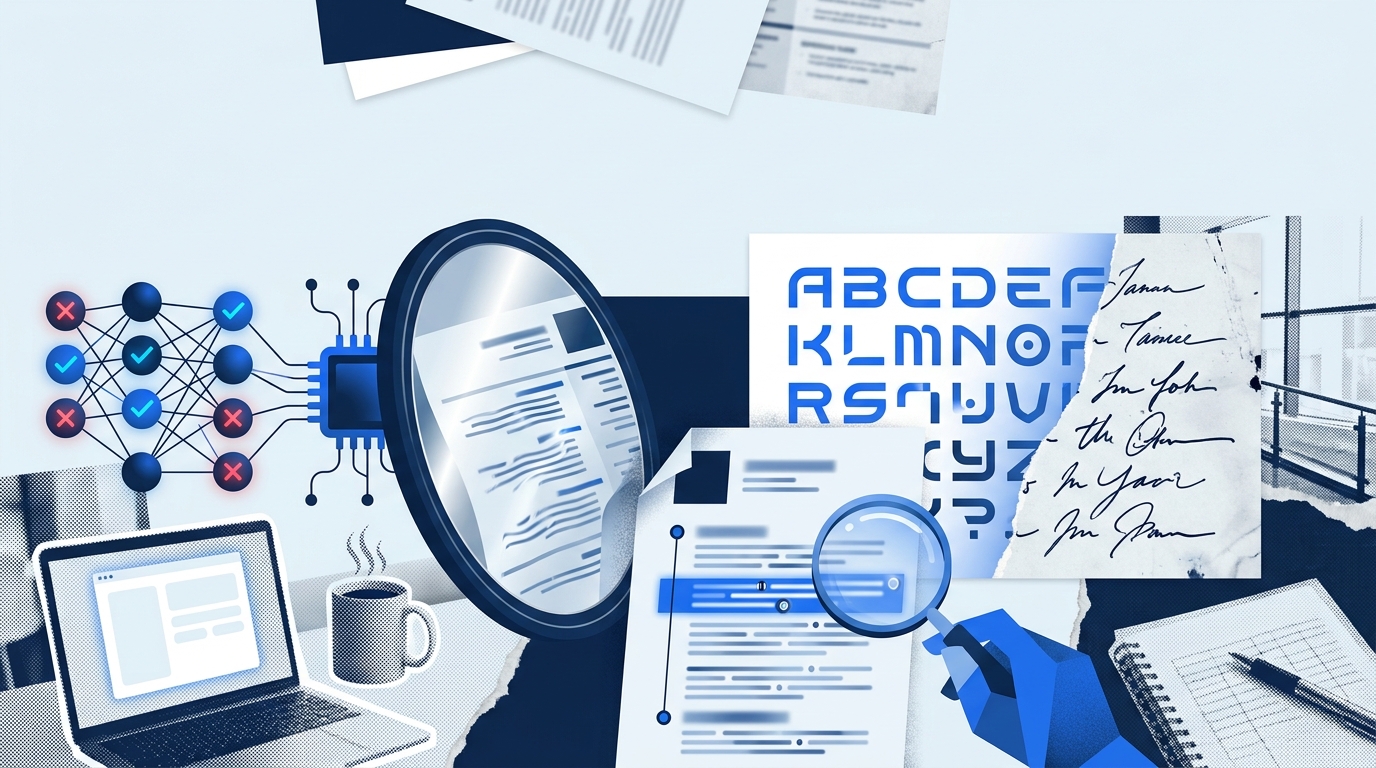
4.5Hiring managers have a name for the document that scores perfectly on automated filters and collapses the moment a recruiter reads it: the Resume Illusion. Current data shows 62% of hiring managers reject AI-generated resumes that lack specific, personalized details, even after those resumes pass ATS screening.
TL;DR: AI-written resumes are 82% more likely to clear ATS filters, but 62% of hiring managers reject them for lacking authentic detail. These six rules help you keep the ATS advantage while sounding like a real person with a verifiable career.
The tension is structural. AI-polished resumes survive automated screening at dramatically higher rates—up to 82% more likely to pass, according to aggregated hiring data—while 67% of HR leaders say the flood of AI-generated applications has actually slowed their hiring processes. You need AI to get through the gate. You also need to sound like yourself to get the job. The six rules below are how you hold both of those goals at the same time without letting either one win.
Build a master resume before you open any AI tool
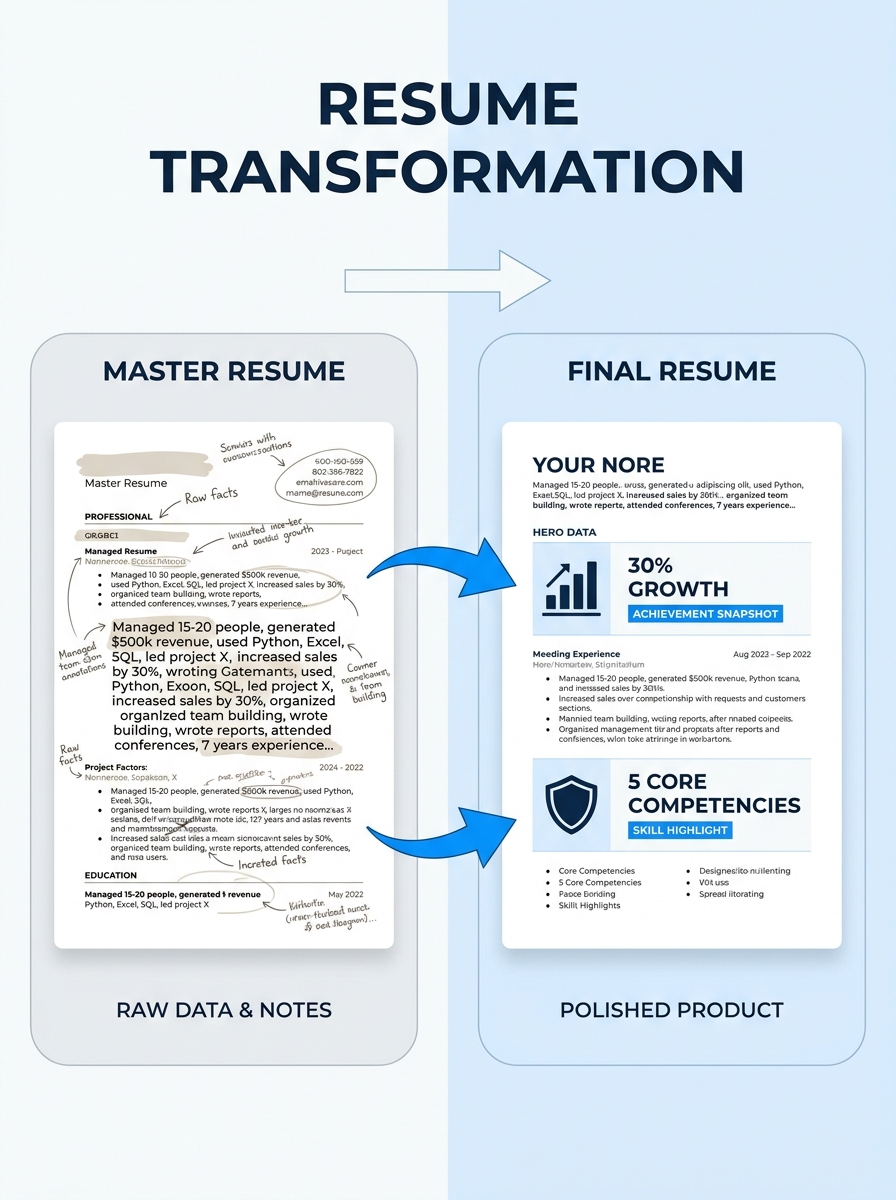
Every bullet point you feed into ChatGPT, Claude, or any resume builder should originate from a verified source document you wrote yourself. That document is your master resume: a private, sprawling file containing every project, metric, tool, and outcome you can prove. It’s the raw material AI gets to organize, never invent.
The reason this step comes first is practical. When you start with a blank prompt and ask AI to write your experience, the tool fills gaps with plausible-sounding claims. A majority of working adults would consider using AI to embellish or lie on their resumes, according to SHRM’s reporting on AI-generated resume fraud. The temptation is enormous because the output looks convincing. But conviction without evidence is exactly what experienced recruiters are trained to catch.
Your master resume should include specific revenue figures, user counts, project names, tools used, team sizes, and exact date ranges. If you need help converting vague duties into measurable outcomes, do that work before any AI touches your document. The AI’s job is to compress and tailor this material for a specific role. The content itself has to be yours.
Run the former-manager test on every bullet point
The single best quality check for AI resume writing authenticity takes 30 seconds per bullet: read it out loud and ask two questions. Would my former manager recognize this as an accurate description of what I did? Does this sound like my language, or like a chatbot trying to impress someone?
As one guide on identifying AI-generated resumes puts it: “If a bullet fails any of those tests, fix it. That is the authenticity paradox.”
The test catches two distinct problems. It catches factual inflation, where AI took your “helped with quarterly reporting” and turned it into “orchestrated cross-functional analytics initiatives driving $2.3M in operational savings.” And it catches voice replacement, where you’d never say “orchestrated” in conversation but the AI defaults to it because resume training data is saturated with that word. Both failures look identical to a hiring manager: formulaic resume language that signals the candidate didn’t write their own document.
This rule has one exception. If you’re early in your career and genuinely don’t know what professional language sounds like for your field, AI suggestions for phrasing can teach you the vocabulary. But the facts underneath still need to be yours. We’ve covered how overpolished profiles cost interviews in detail, and the pattern is consistent: inflated language invites scrutiny that deflated candidates can’t survive.
Weave keywords into accomplishments, never into empty claims
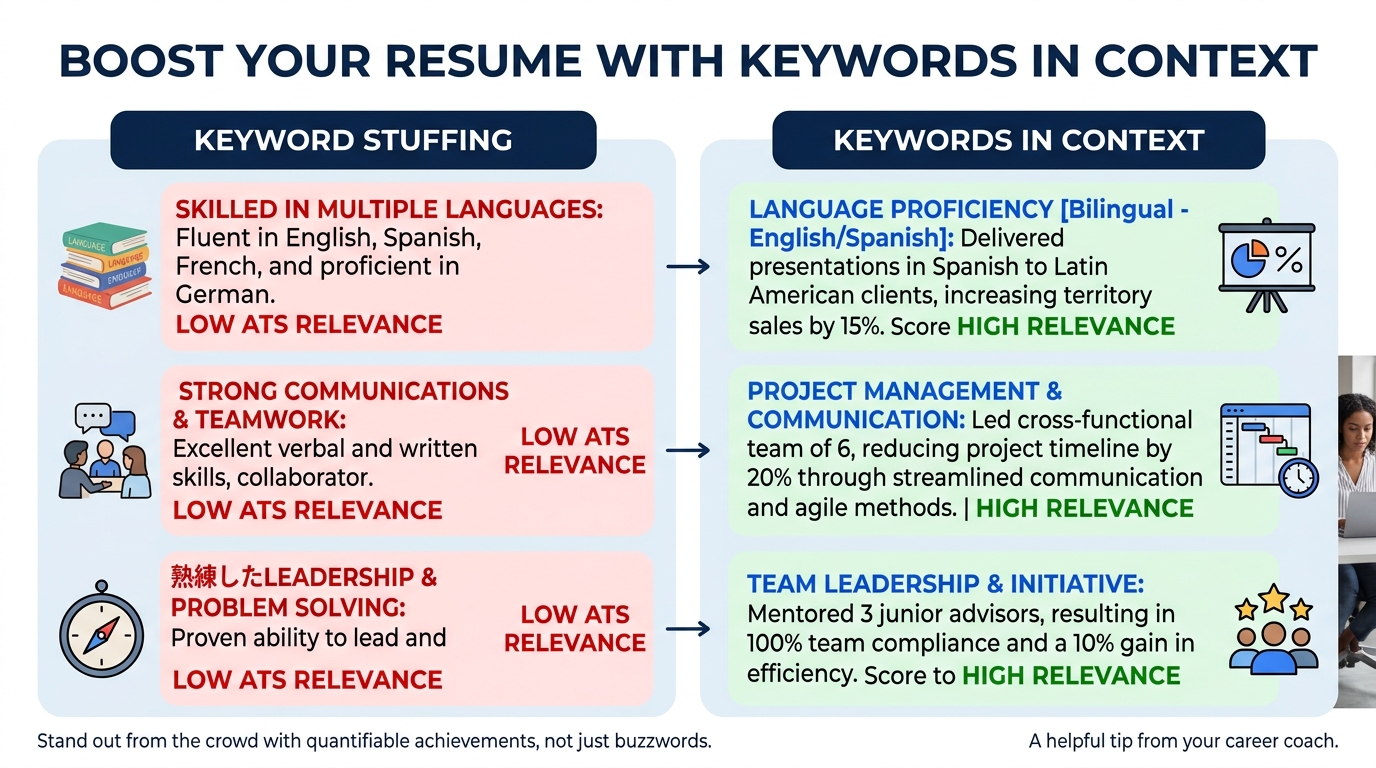
ATS optimization without sounding fake requires one specific technique: embed each target keyword inside a concrete achievement rather than listing it as a standalone skill. The difference between “proficient in project management” and “managed a 14-person product launch across three time zones using Asana and weekly sprint reviews” is the difference between a keyword that reads like filler and one that reads like proof.
Roughly 90% of employers now use AI-driven screening tools, as industry reporting confirms. These systems scan for keyword matches, and they’re growing more sophisticated about context. A keyword surrounded by specific details scores higher on relevance than a keyword floating in a generic skills list. When the resume reaches a human reader, that context separates your application from the 72% of submissions containing near-identical ChatGPT phrasing found in recent screening audits.
Tip: Take three keywords from the job description. For each one, write a sentence that includes the keyword AND a specific number, tool, or outcome. If you can’t attach a real fact to the keyword, you probably shouldn’t claim that skill on this particular application.
The approach applies to action verb choices too: instead of swapping “managed” for “spearheaded” because AI suggested a fancier synonym, pick the verb that accurately describes what you did and wrap it around evidence.
Delete every adjective you can’t defend in a live interview
“Dynamic.” “Results-driven.” “Strategic.” These adjectives appear on millions of AI-generated resumes because language models learn from millions of existing resumes. They’re the written equivalent of dead air, filling space without communicating a single piece of verifiable information.
The interview room is where overpolished resume detection happens in real time. When an interviewer reads “leveraged strategic partnerships to drive exponential growth” and asks you to explain, you need a story with names, numbers, and a timeline. If you can provide that story, the adjective was unnecessary because the facts already do the work. If you can’t provide the story, the adjective was a lie.
Writer Kareem Soliman captured this instinct well when describing his own relationship with AI writing tools: “I discovered a fundamental truth about AI-assisted writing: it serves me best not as a replacement for creativity but as a tool for organizing my thoughts, exploring ideas, and ultimately improving my technical precision, provided I have a vision to work with.” Resumes work the same way. AI polishes your vision. It doesn’t supply one.
Go through your current resume and highlight every adjective. For each one, ask: can I tell a 60-second story proving this word? If no, delete it. A shorter resume full of provable claims will outperform a longer resume full of impressive-sounding fog, every time.
Match your LinkedIn profile to your resume, line by line
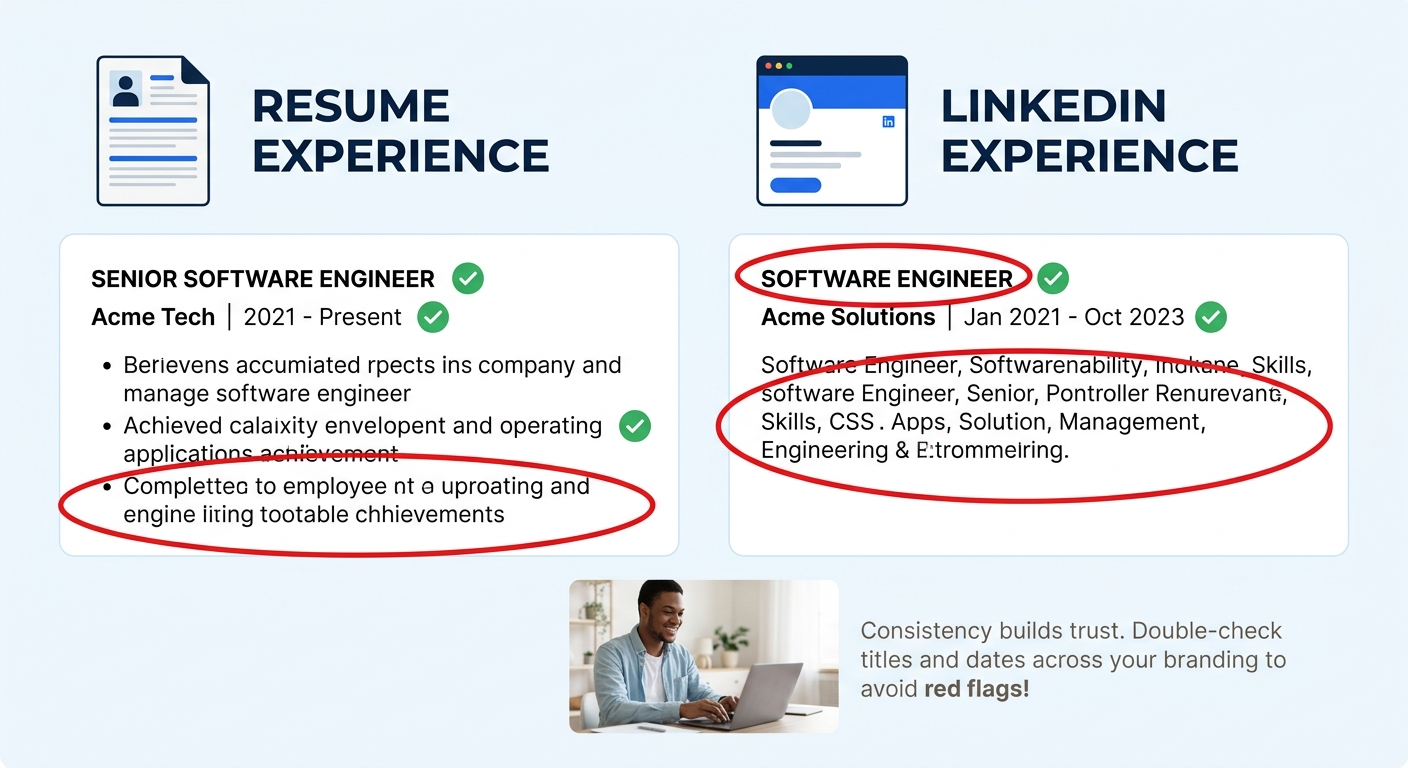
The Harris Poll found that 7 out of 10 employers research a candidate’s social media profiles during the hiring process. If your AI-polished resume says you “led a cross-functional digital transformation initiative” but your LinkedIn says you “worked on the website redesign project,” that gap creates an immediate credibility problem. It tells the recruiter that at least one version of your career history is fabricated.
This rule sounds obvious but gets ignored constantly. People generate a tailored resume for each application, which is smart, then forget to update the LinkedIn profile that recruiters check minutes later. Your LinkedIn doesn’t need to mirror your resume word-for-word, but the scope, title, and timeframe of each role should align. A recruiter who sees “Senior Marketing Manager” on your resume and “Marketing Coordinator” on LinkedIn will call your references before calling you.
The former-manager test works on LinkedIn too: would your old boss recognize your profile description as accurate?
If you’re balancing AI assistance with personal voice across both platforms, use the same master resume document as your single source of truth. Feed it into your resume tailoring workflow and your LinkedIn profile updates at the same time, so both documents draw from the same verified facts.
Treat AI as a packaging layer, never a content source
This distinction is the entire difference between a resume that gets you hired and one that gets you caught. AI packaging means you hand the tool a messy paragraph about your real experience and ask it to tighten grammar, improve parallel structure, and trim it to two lines. AI content generation means you hand the tool a job title and ask it to write your experience for you.
Packaging preserves your voice. Content generation erases it.
As the recruiting team at redShift Recruiting advises: “Replace vague verbs, add missing context, and adjust phrasing so the writing sounds natural to you.” That’s packaging. That’s the line you shouldn’t cross.
The practical workflow looks like this. Write rough bullet points in your own words from your master resume. Paste them into your AI tool with the instruction to edit for clarity and brevity while preserving original meaning. Then read the output against the former-manager test from rule two. If the AI changed the meaning, revert to your draft. If it tightened the wording in a way you’d actually say out loud, keep it. This three-step loop of drafting, editing, and verifying is how you achieve ATS optimization without sounding fake, and it adds about 15 minutes per application compared to letting AI generate everything from scratch. Those 15 minutes are the difference between a resume that gets you an interview and one that gets you exposed in an interview.
When These Rules Conflict
Sometimes rule three (embed keywords in accomplishments) fights with rule four (delete adjectives you can’t prove). A job posting specifically asks for a “strategic thinker,” and you’re tempted to include the phrase even though you know it’s empty on its own. The tiebreaker is always rule two: would your former manager recognize this description? If yes, keep the phrase and add evidence alongside it. If no, find a different way to demonstrate strategic thinking through a concrete project example the hiring manager can verify.
And sometimes the entire framework breaks down because the job you’re applying for is so different from your past roles that your master resume doesn’t contain the right raw material. That’s a signal to pause and figure out whether you’re genuinely qualified, or whether you’re asking AI to bridge a gap that shouldn’t exist on paper. If you’re navigating a real career change, the better path is translating your transferable skills honestly rather than asking a language model to fabricate experience you don’t have. Hiring managers have been reading resumes for decades, across hundreds of thousands of applications. They know what fabrication reads like, whether a human wrote the fiction or a machine did.