


 4.9
4.9 4.5
4.5Twenty-six graphic designer resume examples released August 7 by BeamJobs demonstrate role-specific formatting from intern through senior positions, each template showing portfolio link placement, Adobe Creative Suite proficiency mentions, and layout structures tested for applicant tracking system compatibility alongside visual design appeal.
TL;DR: BeamJobs published 26 graphic designer resume examples on August 7, covering roles from student intern to senior designer, with each template balancing creative presentation and ATS parsing requirements.
The collection addresses a specific challenge in creative hiring: graphic designers must prove design skill through portfolio work while ensuring resumes pass automated screening systems that prioritize plain text parsing over visual flourish, according to BeamJobs. The templates include examples for freelancers, visual designers, logo specialists, and UI/UX hybrid roles.
Each template in the collection treats the resume itself as a design brief, BeamJobs states in the guide, with hiring managers evaluating layout choices as evidence of the candidate’s taste and discipline before reviewing work samples.
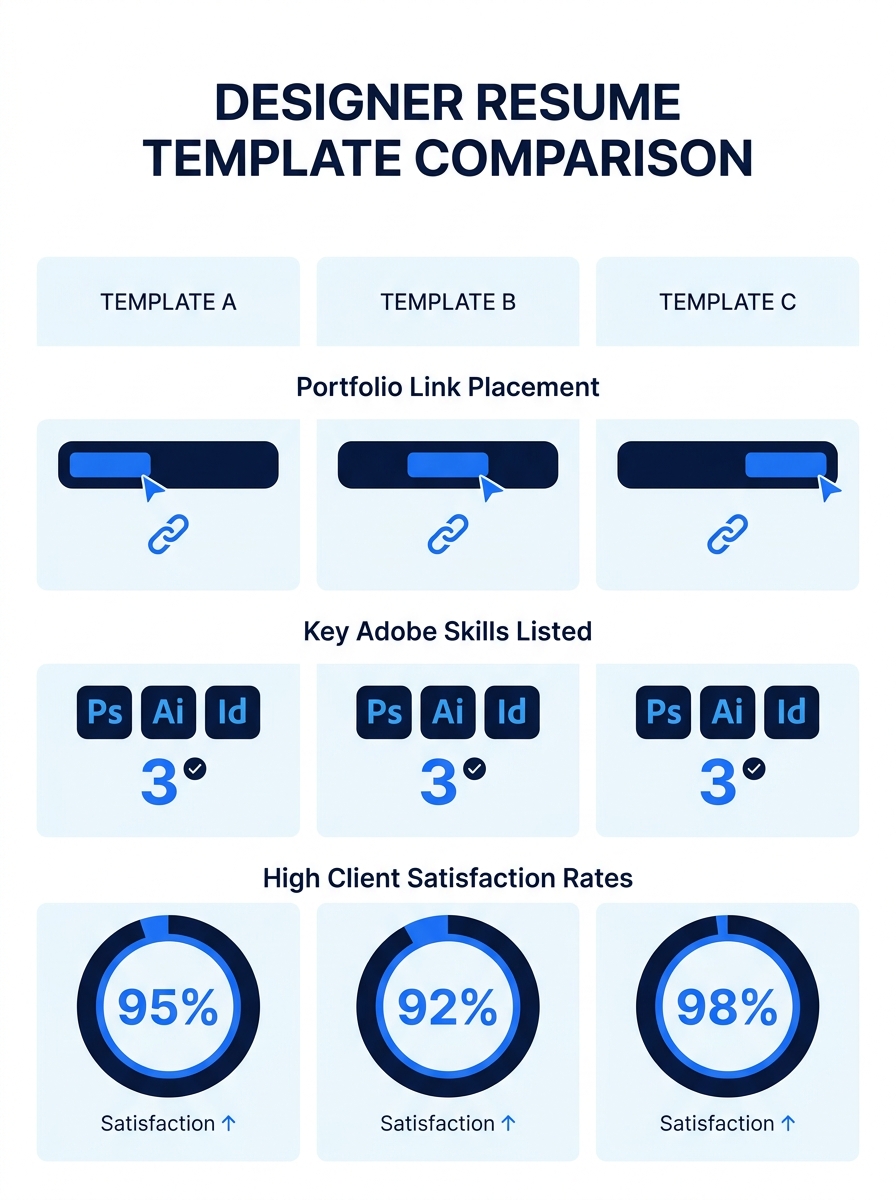
Portfolio Integration Anchors Senior and Freelance Examples
Senior graphic designer templates in the collection emphasize leadership metrics—team hours saved, new customer acquisition figures, design view counts—alongside portfolio URLs positioned in the resume header. The senior example highlights mentoring responsibilities for junior designers, which BeamJobs identifies as evidence of growth beyond individual contributor work.
Freelance graphic designer templates spotlight project-specific tool usage. One sample demonstrates citing Adobe Photoshop, Sketch, and CorelDRAW within achievement bullets tied to client deliverables rather than listing software in a standalone skills section. The guide recommends freelancers quantify client satisfaction rates—one template shows 97% satisfaction across multiple projects—to demonstrate reliability when candidates lack traditional employment tenure.
“Spotlighting project-specific use of design tools and resourcefulness stands out most on a freelance graphic designer resume,” BeamJobs states in the freelance template notes. The structure differs from full-time employee resumes by emphasizing deliverable-based outcomes over continuous role progression.
Entry-Level Templates Substitute Academic Projects for Professional Experience
Beginner and intern templates compensate for limited work history by featuring university projects, relevant coursework, and workshops. The graphic designer intern example includes a Typography Precision seminar that taught industry-standard software including Adobe Photoshop and Sketch. BeamJobs instructs entry-level candidates to treat academic projects with the same metrics rigor as paid work, citing any measurable impact from course assignments or student organization design work.
The graphic design student template demonstrates using tools like Affinity Designer, Adobe Fresco, and Canva in project descriptions, with references to resource platforms like Pixabay and Coolors for inspiration sourcing. Junior designer samples recommend including internship experience with quantified results—recruiters evaluate internships identically to jobs and expect impact demonstration, the guide notes.
A beginner template opens with a career objective customized to each application, which BeamJobs identifies as particularly important for candidates entering unfamiliar territory who need to clarify intent and capability upfront.
Specialized Roles Require Hybrid Skill Displays
Web and graphic designer templates merge front-end development terminology with traditional design language. Logo designer examples emphasize brand identity deliverables and client retention. The UI/UX hybrid template demonstrates proficiency in prototyping tools—Figma, InVision, Blender—alongside static design software, reflecting the expanding scope of modern design roles.
Visual designer samples prioritize mention of collaboration platforms and version control systems that signal team-based workflow experience. Creative designer templates recommend pairing a fine arts degree in graphic design with experience summaries, as some employers screen for bachelor’s credentials, but the guide warns against relying on visual design alone to communicate qualifications.
BeamJobs provides Microsoft Word, Google Docs, and PDF download options for each of the 26 templates, with a resume builder tool offering AI-powered customization suggestions and accent color options. The layouts use clean hierarchy and scannable headings to minimize clutter while signaling design discipline through typography and whitespace choices.
Job seekers looking to strengthen their application materials beyond the resume itself may find value in reviewing proven cover letter structures that pair with portfolio-driven applications.
Why This Matters Now
Graphic design job applications in 2026 face dual screening: automated keyword parsing before human creative review. Resumes that prioritize elaborate visual design over structured content fail ATS parsing, while plain-text resumes with no design consideration signal weak aesthetic judgment to creative directors. The 26 examples resolve this tension by demonstrating hierarchy, typography, and whitespace choices within ATS-compatible single-column layouts.
The templates arrive as design roles expand beyond static deliverables into motion graphics, UX prototyping, and front-end collaboration, requiring candidates to prove both software versatility and cross-functional fluency. Showing tool usage within achievement contexts—rather than listing software in isolation—helps hiring managers understand how candidates apply technical skills to business outcomes.
For mid-career designers, the senior and freelance examples model how to quantify creative work that traditionally resists metrics: client satisfaction percentages, design view counts, team efficiency gains. These figures give non-creative stakeholders in hiring processes—HR screeners, department heads—concrete evaluation criteria beyond subjective portfolio assessment.