

 4.9
4.9 4.5
4.5LinkedIn profile optimization in 2026 requires keyword integration within natural-sounding sentences rather than headline stuffing, according to a profile-writing guide published June 1 by Resume Writers Online. The platform’s visibility rules now favor profiles that demonstrate professional identity through context and storytelling over those built around compressed keyword lists, the guide states. Recruiters evaluate profiles before initial contact, clients review them before replying to outreach, and industry peers visit after observing single-comment engagement, making profile coherence a baseline requirement rather than an optimization bonus.
TL;DR: Resume Writers Online’s June 2026 guide positions LinkedIn optimization around natural keyword placement, first-person About sections, and impact-focused experience descriptions rather than title repetition or keyword density tactics.
The shift reflects how LinkedIn functions as a “living professional introduction” rather than a static résumé repository, Resume Writers Online noted. Profiles must now answer three questions within one minute of viewing: what the person does, where their professional strength lies, and why a visitor might want further engagement.
Profile Photo and Banner Standards
Profile photos should prioritize recognition over studio-quality production, the guide recommends. Clear lighting, current appearance, and appropriate professional context meet baseline requirements. The banner image, while frequently ignored, shapes first impressions when chosen intentionally, workspace images, industry-related visuals, or simple designs that reinforce professional tone outperform default placeholders.
Headline Construction Beyond Job Titles
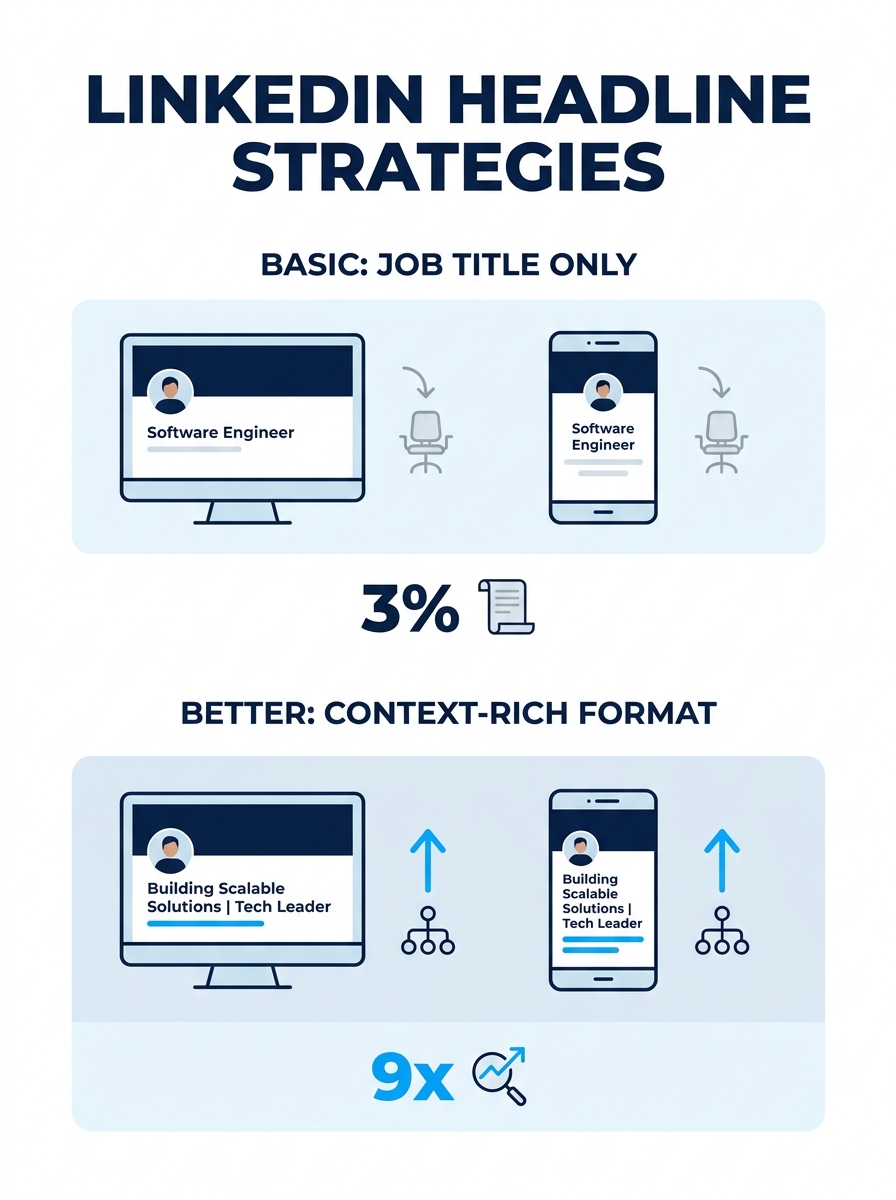
The headline appears across search results, comments, connection requests, and direct messages, making it “one of the most important parts of linkedin profile optimization,” according to the guide. Effective headlines add context rather than repeating job titles alone. A marketing manager might write “Marketing Manager focused on brand storytelling, customer insights, and content-led growth” instead of the bare title, giving visitors immediate clarity on scope and approach.
Resume Writers Online cautions against keyword cramming. “Too many keywords can make the line feel cramped and unnatural,” the guide states. Strong headlines answer what the person does, where their strength lies, and why someone might want to know more, typically within 120 characters.
About Section Writing Approach
The About section should function as a professional narrative connector rather than résumé duplication, the guide advises. First-person writing feels more natural on LinkedIn’s personal platform than third-person formality. “Saying ‘I work with teams to improve operational systems’ feels more natural than ‘John is a results-driven professional with extensive experience,'” Resume Writers Online writes.
Effective About sections open with a simple work statement, explain problem-solving focus, describe experience that shaped current approach, and identify active concentration areas. Keywords belong in normal sentences rather than isolated lists. Terms like project management, data analysis, UX design, or cybersecurity should appear “naturally because they are part of your actual work,” the guide notes.
This approach aligns with broader LinkedIn optimization strategies for mid-career professionals, which prioritize authentic positioning over keyword gaming.
Experience Section Impact Focus
LinkedIn experience sections in 2026 should demonstrate impact rather than list responsibilities, according to the guide. Job-description language (“responsible for managing”) yields less credibility than outcome-focused statements. “Instead of only saying what you were responsible for, explain what changed because of your work,” Resume Writers Online recommends.
Specific improvements carry more weight than vague claims. “Helped simplify weekly reporting so managers could review project status more quickly” outperforms generic language about “driving excellence across multiple functions,” the guide states. Current and relevant experience deserves expanded detail; older roles should receive condensed treatment to avoid archive-style profiles.
The recommendations mirror the process-versus-outcomes approach that career coaches emphasize for résumé construction, suggesting convergence between LinkedIn and résumé optimization best practices.
Context and Outlook
Resume Writers Online’s updated guidance reflects LinkedIn’s evolution from passive professional directory to active visibility platform. The company’s emphasis on natural keyword placement and first-person storytelling suggests that algorithmic ranking now penalizes obvious optimization tactics while rewarding coherent professional narratives. Job seekers who treat LinkedIn optimization as headline engineering risk lower search visibility than those who build contextual profiles around actual work patterns.
The shift poses particular challenges for career changers and recent graduates, who may lack extensive work narratives to draw from. Mid-career professionals with clear specialization appear best positioned to benefit from context-rich optimization, though the guide’s baseline recommendations, recognizable photos, impact-focused experience descriptions, natural About section writing, apply across career stages.
Whether Resume Writers Online’s approach produces measurable visibility improvements remains untested in comparative studies. The guide itself cites no response-rate data, recruiter surveys, or A/B testing results, positioning its recommendations as expert observation rather than empirical validation.