

 4.9
4.9 4.5
4.5Former Workday CEO Carl Eschenbach told McKinsey’s Inside the Strategy Room podcast in August 2025 that workplace attitude determines career trajectory more than job titles or credentials, a view Amazon CEO Andy Jassy publicly endorsed in 2024. Eschenbach, 59, who stepped down from Workday’s chief executive role in February 2026, said his own career accelerated when he shifted focus from personal achievement to serving others, according to Fortune.
TL;DR: Former Workday CEO Carl Eschenbach and Amazon CEO Andy Jassy say attitude—not titles or networks—determines career success, especially for professionals in their twenties navigating AI disruption and tight job markets.
What Eschenbach Said About Mindset and Career Altitude
“The attitude that you bring to the office—and to your employees, your peers, and the people you serve alongside every day—is what ultimately will determine a lot of your success,” Eschenbach said on the McKinsey podcast. “I often say your altitude in life is completely determined by your attitude in life.”
Eschenbach, who worked at Dell and Sequoia Capital before joining Workday’s C-suite in late 2022, described a career turning point: “Once I transitioned from a life of success for myself to a life of significance for others, everything changed.” He handed Workday’s CEO role back to cofounder Aneel Bhusri in February 2026 after three years leading the workforce technology company.
The former CEO framed the shift as counterintuitive but testable. “By serving others, somehow success will follow you—probably even more success than if you focused on success itself,” he told McKinsey’s Eric Kutcher. His perspective draws from competitive wrestling, a background Eschenbach has said shaped his business approach.
Amazon CEO Echoes the Same Career Framework
Amazon CEO Andy Jassy told LinkedIn CEO Ryan Roslansky in 2024 that attitude outweighs MBA credentials and professional networks, particularly for workers in their twenties. “An embarrassing amount of how well you do, particularly in your twenties, has to do with attitude,” Jassy said, according to Fortune’s report.
Brooks Running CEO Dan Sheridan reinforced the pattern in a 2025 interview with Fortune’s Leadership Next podcast. “I just think as leaders, you have to be optimistic. You have to have a winning attitude. Otherwise, no one’s going to follow you,” Sheridan said. “Your customers aren’t going to follow you. Your employees aren’t going to follow you, and your owners are probably going to scratch their head and say, what’s going on here?”
Eschenbach told McKinsey that authentic, vulnerable leadership stands out across seniority levels. “Having interacted with a lot of senior leaders in the world, I think the ones who are the most humble and grounded, and remember where they came from, who remain highly authentic and vulnerable, are the type of people that others will follow,” he said.
The Tactical Framework: Networks and AI Adoption
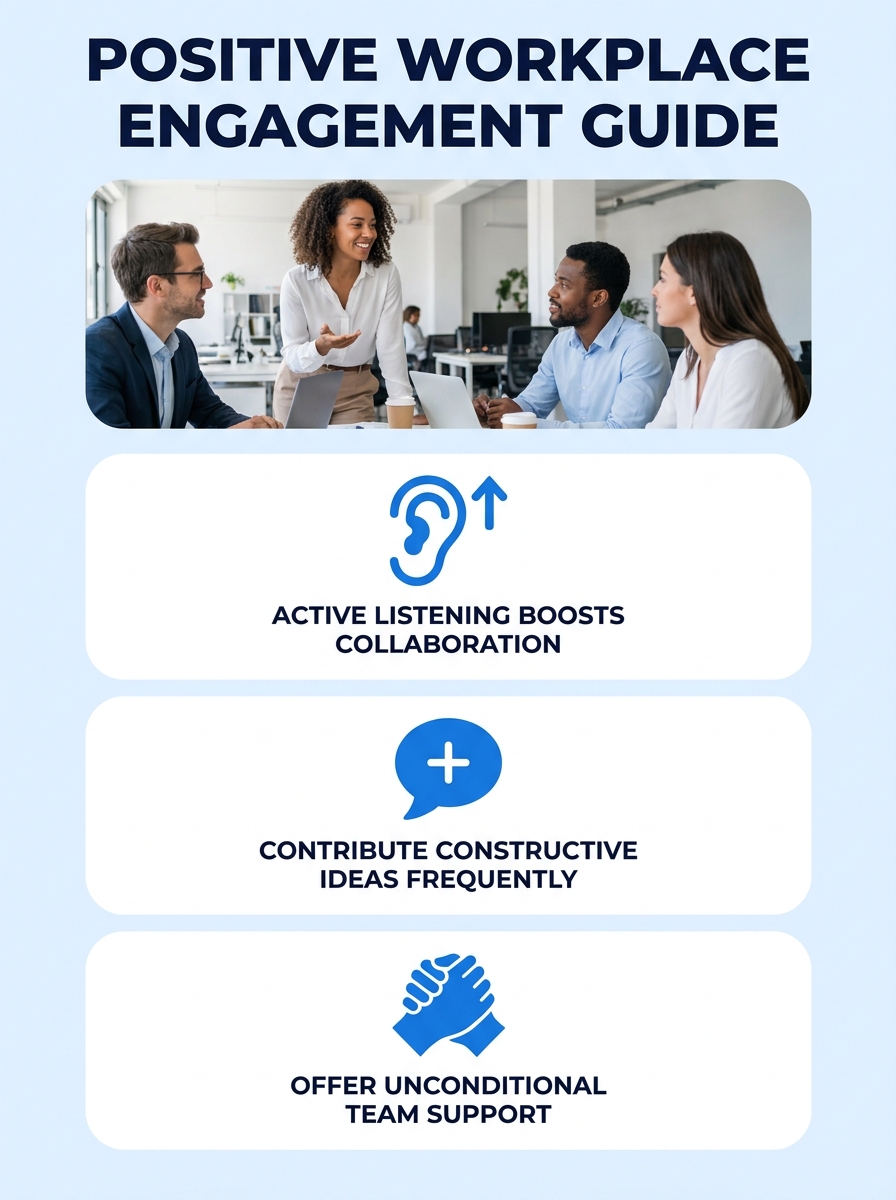
Eschenbach paired attitude guidance with two concrete actions: expanding professional networks and adopting AI tools. “I always say the power of your network is only as strong as the number of nodes that are in it,” he told Kutcher. “Find those nodes and use them to help you expand your network, because this is one of the gifts that will keep on giving in your career.”
On artificial intelligence, Eschenbach urged professionals to integrate rather than resist emerging tools. “Lean into technology, don’t be afraid of it. Figure out how you peacefully coexist with it. Figure out how you use it to help you in your career, but also how it helps others drive productivity for all of human mankind,” he said on the podcast.
The advice comes as mid-career professionals face documented advancement barriers tied to competence perception rather than attitude, according to a separate Forbes analysis. Job seekers navigating panel interviews are evaluated on decision quality and demonstrated learning rather than prior titles, per behavioral interview frameworks designed for career changers.
Context and Outlook
The Fortune story, originally published September 2025 and updated May 31, 2026, positions Eschenbach’s perspective as guidance for Generation Z professionals entering a labor market shaped by AI automation and economic uncertainty. The narrative frames attitude as an internal control variable when external hiring factors—job cuts, credential inflation, algorithmic screening—remain volatile.
Career coaches typically address mindset in the context of interview performance and networking confidence, but rarely as the primary career differentiator over technical skills or credentials. The executive consensus from Eschenbach, Jassy, and Sheridan shifts that hierarchy, at least rhetorically. Whether attitude alone moves hiring outcomes for job seekers remains untested in labor-market data. What LinkedIn profile optimization strategies and resume frameworks demonstrate is that positioning—how candidates frame experience and communicate value—directly influences interview conversion rates, and positioning is downstream of the self-perception mindset these executives describe.
For professionals writing resumes and preparing for interviews in 2026, the practical implication is that service-oriented language and collaborative framing may test better than achievement-focused bullet points, particularly when combined with quantifiable outcomes. The gap between executive advice and job-seeker execution typically appears in cover letter personalization and behavioral interview responses, where candidates struggle to translate abstract mindset principles into concrete career narratives.