

 4.9
4.9 4.5
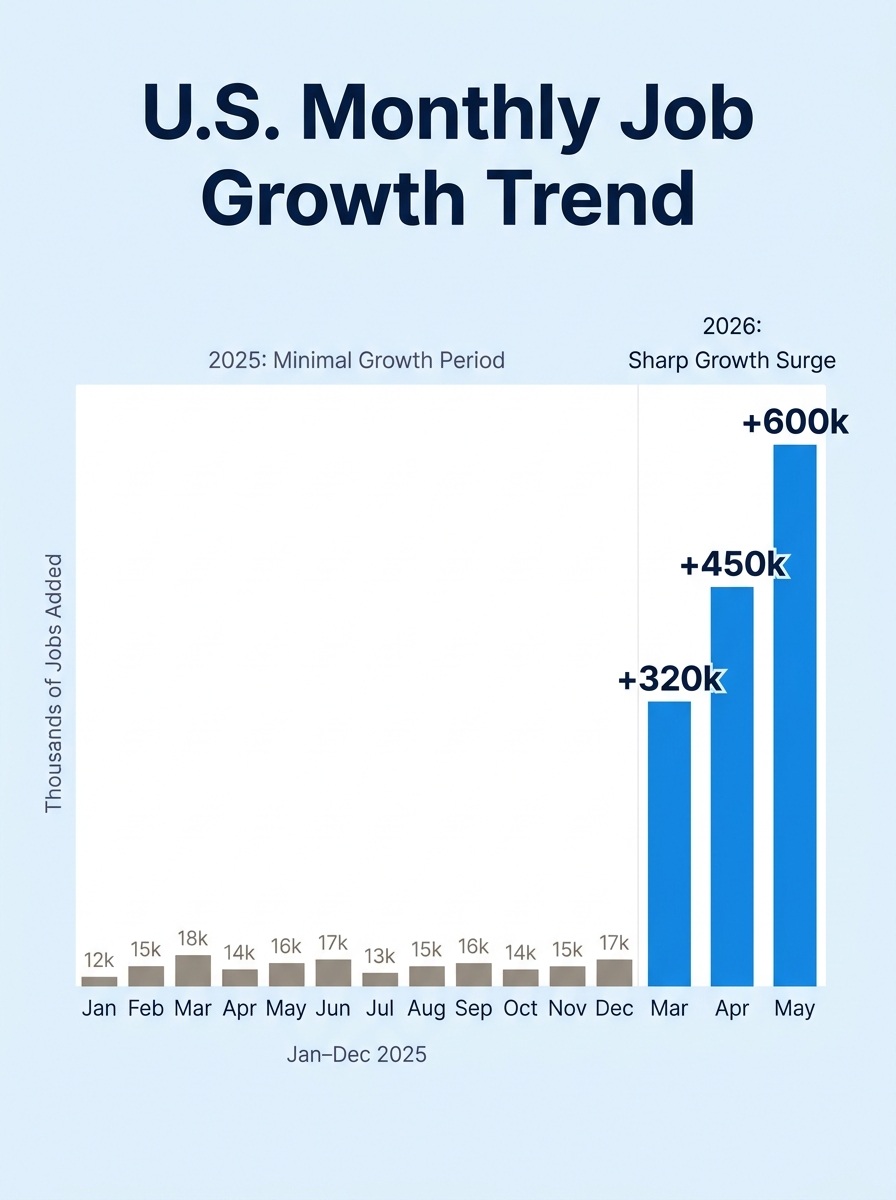
4.5U.S. employers added 172,000 jobs in May, more than double the 85,000 economists predicted, and the unemployment rate held at 4.3%, according to the BLS report released June 5. That marks three consecutive months of job growth, the first such streak since May 2025.
TL;DR: The May 2026 jobs report crushed forecasts, with 172,000 new positions and upward revisions to March and April data. Leisure & Hospitality, Local Government, and Health Care drove the gains, while Financial Activities shed 22,000 roles. If your resume has been gathering dust through the 2025 slowdown, this rebound window rewards candidates who move fast with targeted, quantified materials.
Three Months of Growth, and the Revisions That Tell the Real Story
The headline 172,000 figure matters, but the backward revisions reveal more about where the labor market is heading. The BLS revised March’s gains upward to 214,000 (from 185,000) and April’s to 179,000 (from 115,000). That’s an additional 93,000 jobs the economy created that weren’t visible in real time.
Average monthly job growth in 2026 now sits at roughly 114,000 positions, according to The New York Times. Compare that to the 10,000-per-month average throughout 2025, when tariff uncertainty and cautious corporate spending froze hiring budgets across most sectors. The gap between those two numbers is enormous, and it tells you something concrete: companies are spending money on people again.
For anyone who’s been watching and waiting through the slowdown, this data is the clearest green light you’ve gotten in over a year. But green lights turn yellow. The labor market rebound creates a window, and windows close. Understanding the resume strategy labor market rebound demands is the difference between capitalizing on this moment and watching it pass.
Where the Hiring Is Concentrated
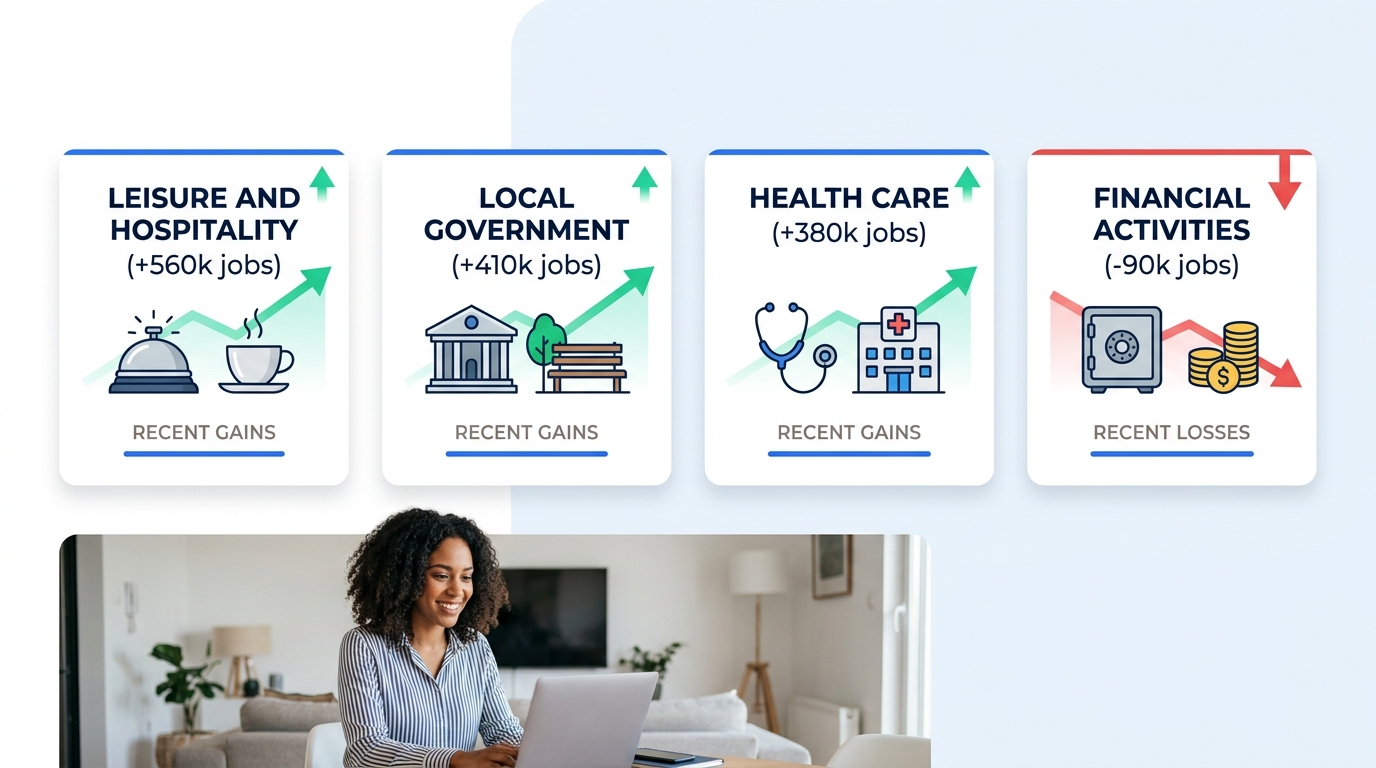
Why does the sector breakdown matter for your resume? Because a 172,000-job month doesn’t help you if your industry is the one contracting. The May 2026 jobs report implications vary dramatically by sector.
| Sector | May 2026 Job Gains | Resume Positioning Implication |
|---|---|---|
| Leisure & Hospitality | +70,000 | Operations, guest experience, and management roles in high demand. Emphasize revenue impact and team leadership metrics. |
| Local Government | +55,000 | Public administration, education support, and infrastructure roles expanding. Highlight compliance, budget management, and stakeholder coordination. |
| Health Care | +35,000 | Clinical and administrative positions growing steadily. Quantify patient outcomes, process improvements, and regulatory adherence. |
| Financial Activities | -22,000 | Banking and insurance contracting. Candidates face a competitive field and need sharper differentiation on measurable outcomes. |
Private sector payrolls overall added 120,000 positions. But the Financial Activities sector shed 22,000 jobs, making it one of the few segments still shrinking. If you’re in banking, insurance, or financial services, your resume has to work harder than someone in hospitality or healthcare right now. That means being more specific about outcomes, more aggressive about quantifying contributions, and more deliberate about writing for both ATS algorithms and human reviewers.
The Center for American Progress noted that despite the strong headline numbers, labor underutilization is still growing for some segments of the workforce. A rising tide is lifting most boats, but some sectors have holes in the hull.
The Speed Equation: 10 Days vs. 44 Days
Here’s the mismatch that catches job seekers off guard during a rebound. According to the Addison Group’s 2026 Workforce Planning Guide, time-to-hire has stretched to 36-44 days across most employers. But top candidates are typically off the market within 10 days.
That 26-to-34-day gap between when companies finish hiring and when the best applicants disappear creates a brutal dynamic. If you start updating your resume after you spot the perfect listing, you’re already behind. The people who land roles during hiring surges are the ones who had their materials ready before the surge arrived.
The Indeed Hiring Lab’s February 2026 labor market update flagged that hiring timelines were lengthening even months ago, with openings per unemployed person declining and companies taking longer to make decisions. That pattern hasn’t reversed. Companies are posting more jobs, but they’re still slow to close. You need to be fast where they are slow.
Top candidates disappear from the market in 10 days. The average employer takes 36-44 days to hire. If your resume isn’t ready before the listing goes live, you’ve already lost the race.
Goodwin Recruiting analyzed their Q1 2026 application data and found that weekday applications significantly outpace weekend submissions. The practical takeaway on when to apply for jobs: submit Tuesday through Thursday, when hiring managers and recruiters are most active in their inboxes. Friday submissions tend to sit unread over the weekend, and Monday inboxes are already overloaded.
Tip: Summer hiring has a reputation for being slow, but that reputation works in your favor. Fewer candidates actively search during June, July, and August, which means reduced competition. [Employment Enterprises reports](https://eeihr.com/employment-expert/the-best-times-of-year-to-apply-for-a-new-job-and-why-it-matters/) that summer applicants often stand out more than they would during the January and September surges. If hiring market timing matters to you, this is the window.
Retooling Your Resume for This Specific Moment
A rebound market rewards a different kind of resume than a stagnant one. During the 2025 slowdown, many professionals focused on breadth, trying to look flexible enough for any available role. That approach dilutes your impact in a market where hiring managers are filling specific seats with real budget behind them.
The shift now is toward targeted, outcome-driven positioning. Teal’s 2026 resume trends analysis emphasizes tailoring applications to individual roles, using action-driven language, and focusing on results over responsibilities. Three adjustments matter most right now:
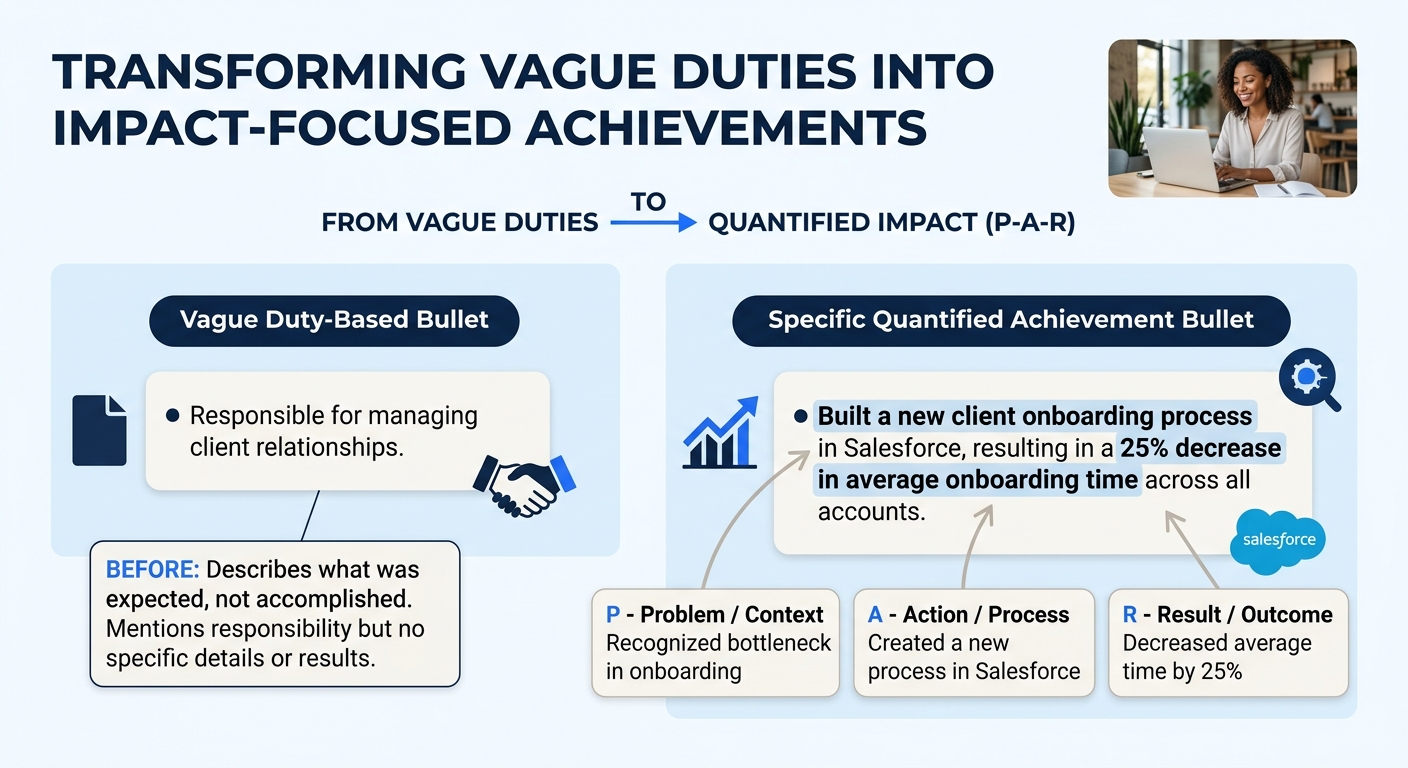
Quantify relentlessly. The PAR framework (Problem-Action-Result) works because it gives recruiters the numbers they’re scanning for. “Reduced onboarding time by 30% by redesigning the training workflow” lands differently than “Managed employee training programs.” If you need help translating experience into measurable impact, we’ve covered this in depth in our resume metrics framework for non-technical roles.
Target by sector, not by seniority. With Leisure & Hospitality adding 70,000 jobs and Financial Activities losing 22,000, a mid-career professional in finance who can credibly position themselves for operations or business administration roles in hospitality has a meaningful advantage. Reverse-engineering job descriptions into targeted resume language is how you bridge that gap without looking unfocused.
Address gaps proactively. If 2025 left you with an employment gap, know that hiring managers in a rebound market are generally more forgiving about gaps that coincide with a known downturn. But you still need to frame them correctly. Our breakdown of gap-framing strategies that work on hiring managers walks through the specific language that neutralizes recruiter concerns before they snowball.
And don’t neglect your LinkedIn profile during this window. With average hourly wage growth at 3.4% running behind the 3.8% inflation rate, salary positioning matters more than usual. A resume gets you the interview; your LinkedIn presence shapes the compensation conversation that follows. Recruiters check profiles before extending offers, and a profile that reinforces your resume’s narrative of quantified impact strengthens your negotiating position.
The Referral Angle in a Heating Market
When hiring accelerates, so does the pressure on recruiters. More open requisitions per recruiter means less time reviewing cold applications. The referral and outreach ecosystem behind most filled roles becomes even more important during surges because recruiters lean on trusted channels to fill positions faster than they can process the application pile.
This is also the right moment to reconnect with former colleagues who’ve moved to growing sectors. A warm introduction paired with a well-targeted resume consistently outperforms a cold application, even when the cold application is perfectly optimized for ATS systems. If you know someone at a healthcare system that’s adding staff or a hospitality group ramping up management hires, that connection is worth more right now than it was six months into the 2025 freeze.
What Remains Uncertain
The May numbers are encouraging, but several open threads make the next few months unpredictable. Wages are growing at 3.4% year-over-year, which sounds decent until you measure it against 3.8% annual inflation. Workers are earning more in nominal terms and less in real terms. That squeeze will shape how aggressively companies continue to hire through summer and into fall.
The Federal Reserve’s response adds another variable. Strong jobs data has shifted market expectations away from rate cuts, with analysts now pricing in a “higher for longer” stance on interest rates. If borrowing costs stay elevated, capital-intensive industries and startups that depend on cheap financing will remain cautious about headcount expansion, even while hospitality and government hiring stays strong.
And the geopolitical backdrop, including rising costs tied to the Iran conflict according to AP News, introduces energy and supply chain pressures that could slow hiring in sectors sensitive to input prices.
The practical read for your job search: this rebound window is real, and average monthly gains of 114,000 are strong by any recent standard. But three months of solid growth doesn’t guarantee a fourth, and the sectors gaining jobs today won’t necessarily be the same ones gaining them in September. If your resume is ready and you’re targeting one of the growing sectors, the data supports moving now rather than waiting for further confirmation. Get your materials tight, apply mid-week, and use your network. The numbers are behind you for the moment, and making the most of it means treating that moment with the urgency it deserves.