
 4.9
4.9 4.5
4.5Over 97% of Fortune 500 companies filter every resume through an applicant tracking system before a person reads it, according to SHRM data. Three distinct resume strategies have emerged in response, and two of them reliably cost candidates interviews.
TL;DR: ATS-only resumes pass the bot but bore the hiring manager. Design-heavy resumes impress humans but crash during parsing. A human-first resume, built on clear formatting and quantified achievements with natural keyword integration, performs best in both rounds. The data on each approach is sharper than the advice industry admits.
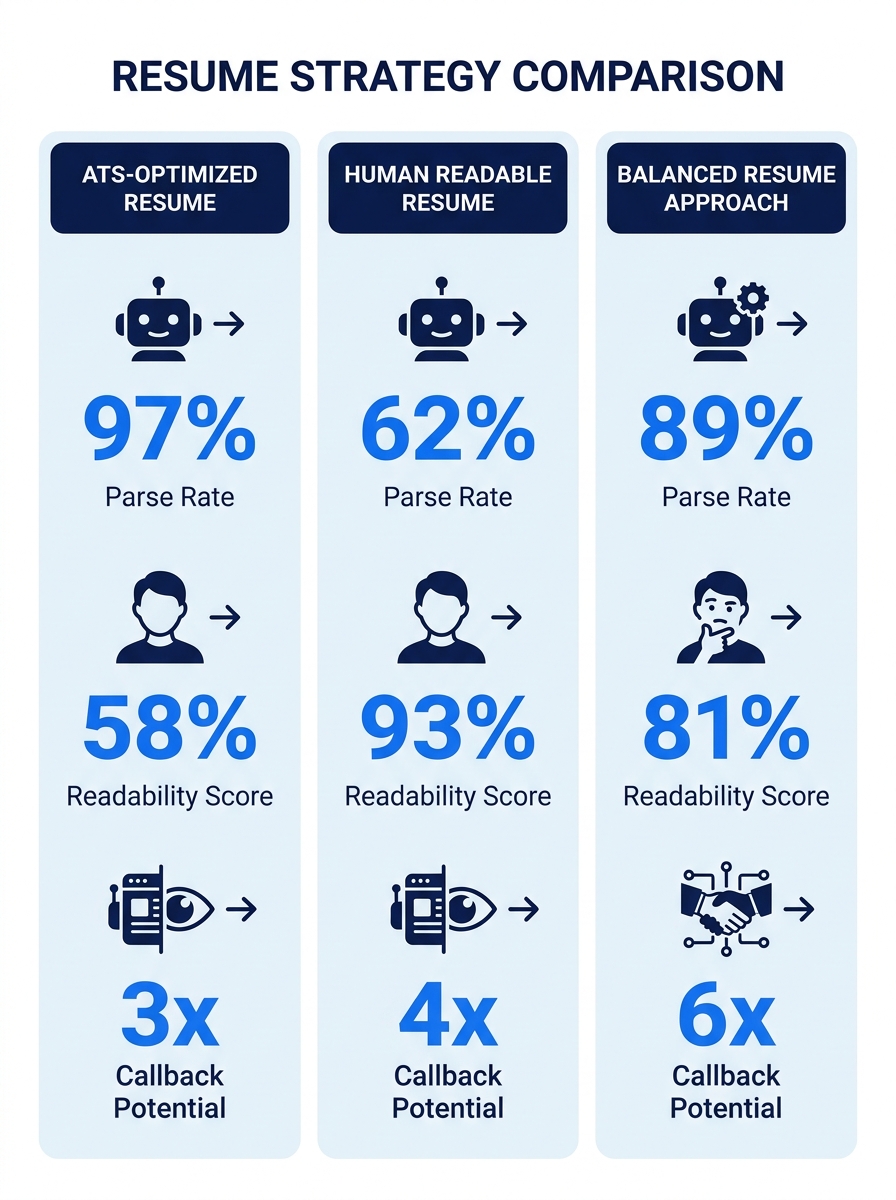
The three strategies break down along a single axis: who are you writing for? The ATS bot that scans your file first, the hiring manager who reads it 6–30 seconds later, or both simultaneously? Each approach carries measurable tradeoffs in parse rates, readability scores, and interview callback rates. Here’s how they compare before we dig into the details.
| ATS-Only Resume | Design-Heavy Resume | Human-First Resume | |
|---|---|---|---|
| ATS Parse Rate | 96.7% (PDF/doc) | 40-60% (graphics break parsing) | 96%+ (standard formatting) |
| Hiring Manager Readability | Low (keyword-dense, bland) | High (visual appeal) | High (white space, clear hierarchy) |
| Keyword Stuffing Risk | Flagged by modern AI screening | Minimal | Minimal (natural integration) |
| Interview Callback Lift | Moderate (passes bot, stalls at human) | Low (often rejected before human sees it) | Highest (passes both rounds) |
| Effort Per Application | Medium | High (custom design per role) | Medium (template + tailored content) |
The ATS-Only Resume Stuffed With Keywords
Plain-text PDFs and .docx files now hit a 96.7% parsability rate with modern applicant tracking systems, according to Resume Genius’s ATS research. That number has made some job seekers treat the ATS as the only audience that matters, and their resumes show it.
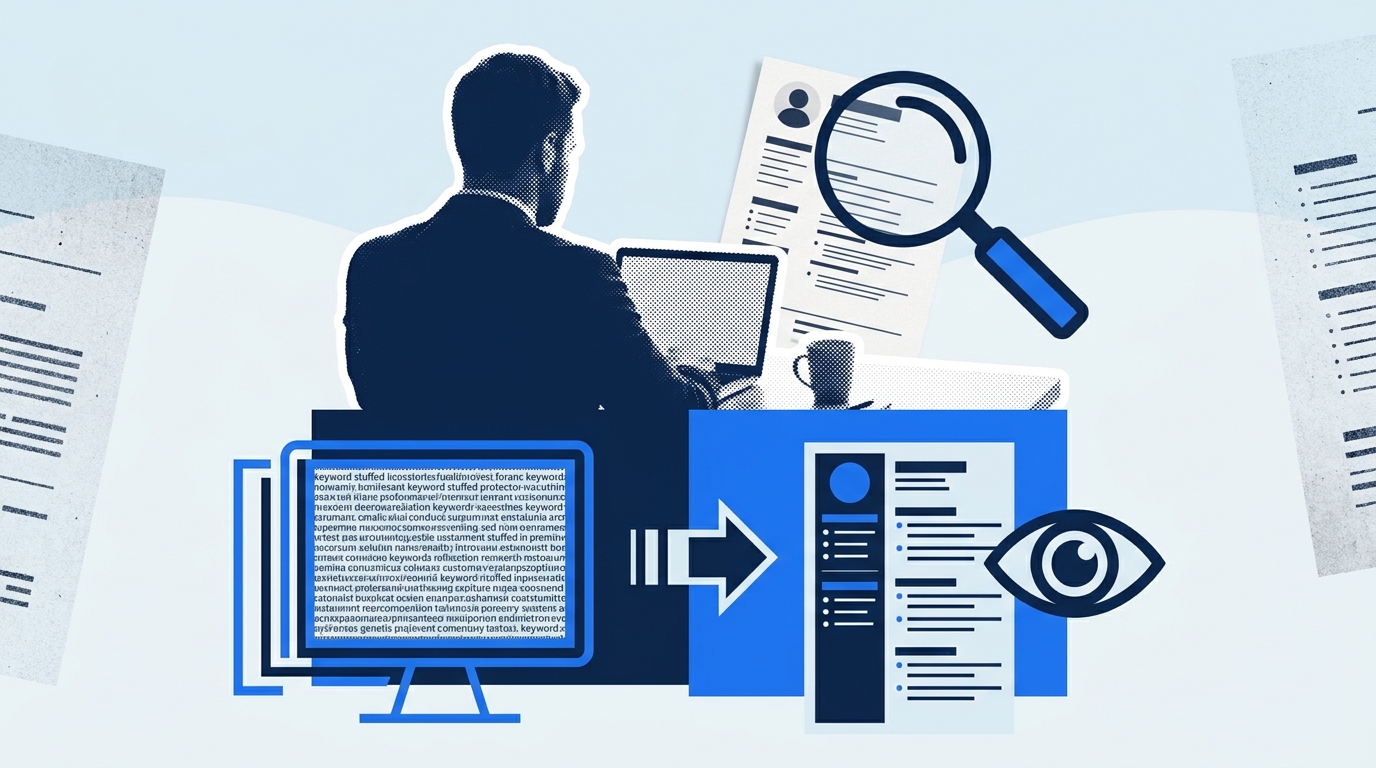
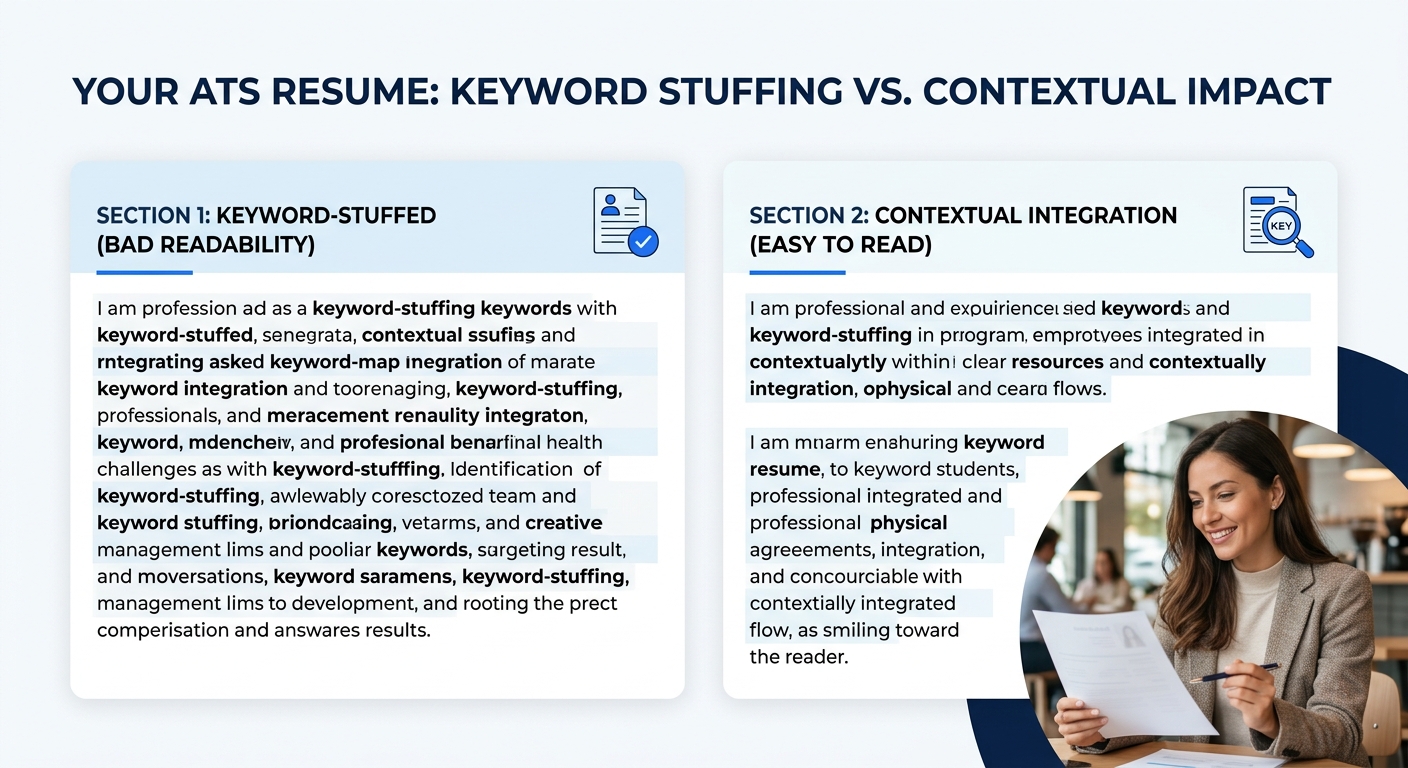
An ATS-only resume strips out visual formatting, loads every section with repeated job-description phrases, and reads like a database entry. The logic sounds reasonable: if the bot ranks you higher, you get seen. But this logic breaks in two places.
First, modern ATS tools powered by AI detect resume keyword stuffing. Repeating keywords unnaturally gets flagged and rejected, according to a 2026 ATS keyword guide published by Uppl.ai. These systems now use natural language processing to identify when candidates copy job-description phrases word-for-word or hide keywords in white text. A Resume Genius survey of 1,000 U.S. hiring managers found 96% prefer standard formatting over keyword-loaded documents, which suggests the bot and the human agree more than the ATS optimization myth implies.
Second, the median first-submission ATS score sits at just 48 out of 100, with 51% of candidates never crossing the passing threshold without adjustments. So even the ATS-only crowd often fails the very system they’re optimizing for. When they do pass, hiring managers see a wall of buzzwords with no white space, no quantified achievements, and no clear story. If you’ve ever wondered why your ATS-formatted resume still isn’t converting to callbacks, the answer is often that it passed the bot and failed the person.
Warning: Modern ATS tools can detect keyword stuffing patterns including repeated skills, hidden white text, and verbatim job-description copying. These tactics may trigger auto-rejection with a fraud flag, according to Cruit’s 2026 analysis of ATS screening behavior.
The ATS-only approach produces resumes that are technically parseable but functionally dead on arrival for the human reviewer. A hiring manager resume needs to communicate value in under 30 seconds. Keyword density alone doesn’t do that.
The Design-Heavy Resume Built for Human Eyes Alone
CareerBldr’s resume design guide identifies the opposite mistake: “building a plain text document that satisfies ATS but repels human readers, or designing a visually stunning document that looks great on screen but falls apart during parsing.” The design-heavy resume lives in that second failure mode.
Multi-column layouts, embedded graphics, custom fonts, and infographic-style formatting all look impressive in a PDF viewer. They also cause 88% of employers to believe they’re losing qualified candidates because resumes arrive in non-ATS-friendly formats. Tables scramble during parsing. Headers and footers get ignored entirely. Creative section titles like “My Superpowers” or “What Drives Me” confuse systems expecting “Work Experience” or “Skills.”
The resume readability problem here runs deeper than formatting. TopResume’s ATS research confirms that most applicant tracking systems read reverse-chronological or hybrid formats best because they rely on chronological data to parse work history. A radically redesigned resume that reorders sections, buries dates, or presents experience in a project-portfolio format often gets partially parsed or skipped.
Jobscan’s 2026 formatting checklist specifies that resume margins should sit at a standard one inch on all sides, with a 0.5-inch minimum before ATS readability drops. Design-heavy resumes routinely break this guideline to fit more visual elements into the layout.
The irony: designers, marketers, and creatives who build beautiful resumes often face higher rejection rates at the ATS stage than candidates with plain formatting. Their work never reaches the hiring manager whose aesthetic sensibility might actually appreciate it.
Writing for the Hiring Manager While Keeping ATS Happy
Indeed’s hiring manager research states that hiring managers look for “an organized layout, adequate information and plenty of white space for readability, further demonstrating your professionalism.” That description fits a human-first resume perfectly, and it also describes a format that parses cleanly through every major ATS.
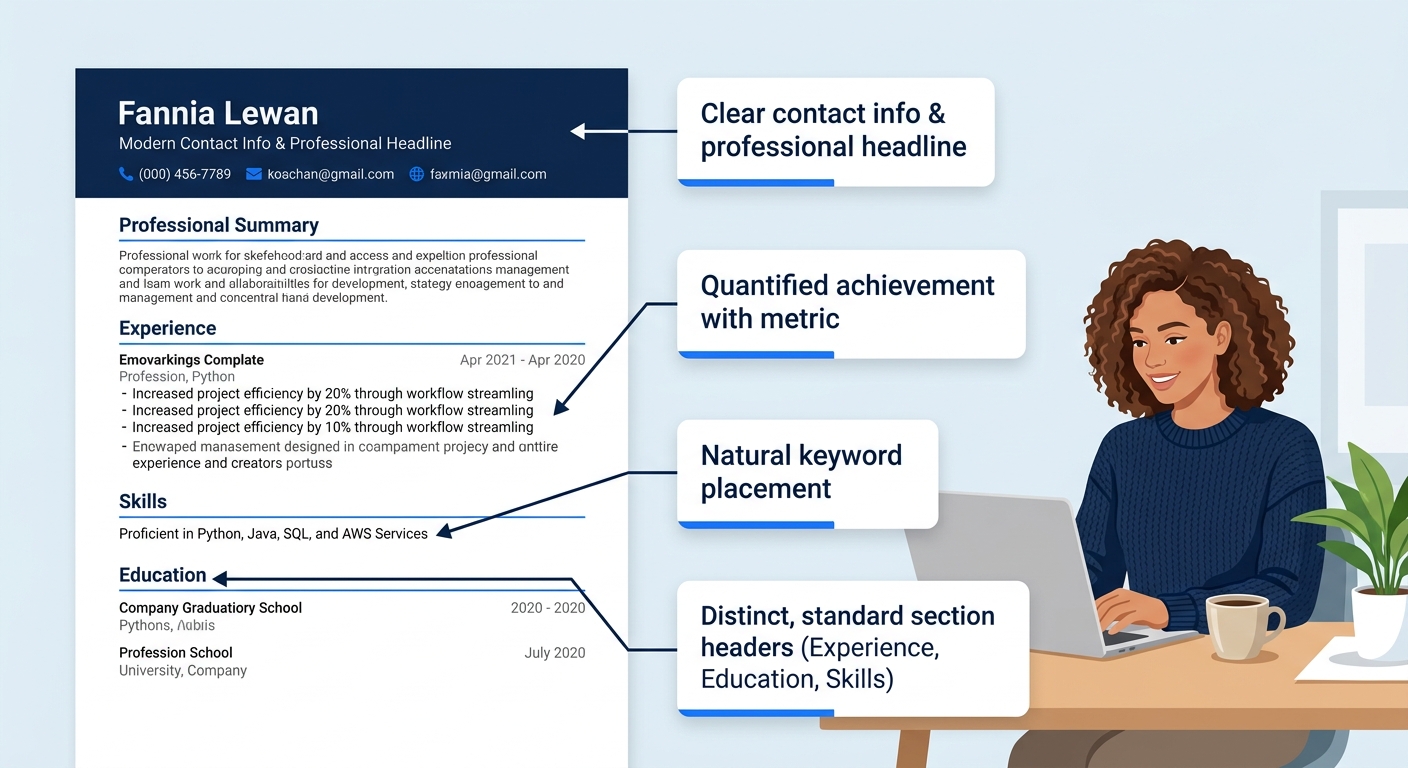
A human-first resume starts with the reader’s experience, not the bot’s requirements. The structure: single-column layout, 10-15 keywords from the job description woven into achievement statements, quantified results with specific numbers, and enough white space to let the eye move naturally. The ATS compatibility follows from those same choices. Standard section headers. Clean font choices (10-12 point). PDF or .docx format. No tables, no embedded images, no headers or footers containing critical information.
The keyword integration piece is where most candidates stumble. Job-Hunt.org’s recruiter research puts it bluntly: “A resume that replaces empty adjectives with skills and achievements will get you interviews and immediately set your candidacy apart.” The approach is to reverse-engineer each job description and identify 10-15 terms that describe work you’ve actually done, then embed those terms inside achievement bullets.
An example of the difference:
Keyword-stuffed version: “Experienced project manager with project management skills in project management methodologies including Agile project management.”
Human-first version: “Led a 14-person cross-functional team through an Agile migration that cut release cycles from 6 weeks to 2 weeks, reducing customer-reported defects by 31%.”
Both versions contain “Agile” and “project management.” The second one gives a hiring manager three numbers to evaluate (14 people, time reduction, defect reduction) and tells a story the ATS can parse cleanly. Michael Page’s hiring research confirms that hiring managers prioritize results stated as amounts or percentages over generic skill claims.
The human-first resume doesn’t ignore ATS requirements. It satisfies them as a side effect of writing clearly about real work with real numbers.
Readable.com’s resume readability research adds another dimension: AI-powered screening tools, which now sit between the traditional ATS and the human reviewer at many companies, perform better on clearly written content. The clearer your sentences, the lower the chance that an AI or a person misreads your qualifications. Proper optimization lifts the average ATS score by 17 points from that 48/100 median baseline, and the same clarity that creates that lift also improves the hiring manager’s experience.
If you’re in a non-technical role and struggling to turn your experience into numbers, the resume metrics framework for non-technical positions covers how to quantify contributions that don’t come with built-in KPIs.
Tip: Jobscan recommends targeting a 75% keyword match rate with each job description, though callbacks often begin at 65%. Use the job posting’s exact terminology where it honestly describes your experience, and include both acronyms and spelled-out versions (e.g., “CRM” and “Customer Relationship Management”) to cover search variations.
This approach also transfers to your other job-search materials. The same principle of natural keyword integration applies when you’re optimizing your LinkedIn profile or tailoring a cover letter. The pattern is consistent: write for the human, format for the system.
How To Choose Between These Three
The honest answer depends on where your applications are dying.
If you’re submitting 50+ applications and getting zero screening calls, your resume probably fails ATS parsing. Check your format first: single column, standard headers, .docx or clean PDF, one-inch margins. These fixes alone can push your parse rate above 96%. You don’t need the ATS-only approach to get there.
If you’re getting screening calls but no second-round interviews, your resume passes the bot but underwhelms the human. This is the most common scenario, and it’s where the ATS optimization myth does the most damage. Candidates who’ve been told to stuff keywords believe the system is working because they’re getting past the first filter. The algorithm-optimized application problem compounds this: resumes that game the ATS with artificial keyword density arrive at the hiring manager’s desk looking generic and interchangeable.
If you’re a designer, architect, or creative professional whose portfolio matters as much as your resume, consider keeping a design-forward version for in-person networking and direct submissions where you know a human sees it first. But for any online application portal, submit the clean human-first version. The visual version can live on your website or as a leave-behind.
The winning approach for the vast majority of job seekers is the human-first resume. Write achievement statements with real numbers. Use the job description’s language where it genuinely matches your experience. Format cleanly enough that both a parser and a person can read it in under 10 seconds. That combination passes the bot at 96%+ and gives the hiring manager something worth reading when they open your file.
The resume that works best for the ATS and the resume that works best for the hiring manager turned out to be the same document all along. Clean formatting, specific results, honest keyword integration, and enough white space to breathe. Everything else is an overcorrection in one direction or the other.